How to open KupiSpisok in Telegram or MAX
There is no separate file to download. Open the bot in your preferred messenger and launch the Mini App:
Both entry points use the same service logic. You can create personal, family and shared lists, choose dishes, add ingredients and mark purchased items. Profiles from Telegram and MAX are not merged automatically because each platform supplies its own verified user identity.
Why the shopping list lives inside a messenger
A standalone mobile app must be found, installed and explained to every participant. A list in a group chat is easier to start but difficult to structure: messages mix together, old versions remain visible and products are hard to assign.
A Mini App sits between those formats. The user enters from a familiar chat and gets a proper interface with categories, search, cards, account controls and collaboration. The MAX documentation connects a Mini App to a chatbot, while Telegram Mini Apps can launch from a bot profile, menu, button or direct link.
One Mini App, two messenger integrations
The common architecture is:
MAX or Telegram bot → Mini App → shared backend → PostgreSQL → user and admin interfaces.
Users, lists, products, recipes, invitations, permissions and action history live on the server. The shared web interface presents them in both messengers. Platform-specific code still handles:
- signed user data and authentication;
- bot menus and buttons;
- launch links;
- outgoing messages;
- official API constraints.
The second platform is therefore not “free,” but the catalog and business rules do not need to be built and maintained twice.
Personal, family and shared shopping lists
The first screen offers three clear modes: a private list, a persistent family list and a shared list for a trip, event, office or another one-off purchase.
A shared list receives an invitation link and an eight-digit code. The invited person sees only that purchase, not all the owner's data. If the creator removes the list, ownership can pass to another participant instead of deleting everybody's work.
Participants can claim individual items. The service prevents two people from taking responsibility for the same item and uses colour labels to make assignments visible.
Recipes become calculated ingredient lists
The catalog contains 96 dishes. A user chooses a recipe, version and volume or serving count, and the service recalculates the ingredients before adding them to the list. Compatible items are merged by unit rather than duplicated.
This same pattern works for business: products can become equipment, properties, courses or service options, while a recipe can become a kit, package or order configuration.
Synchronisation and quick bot actions
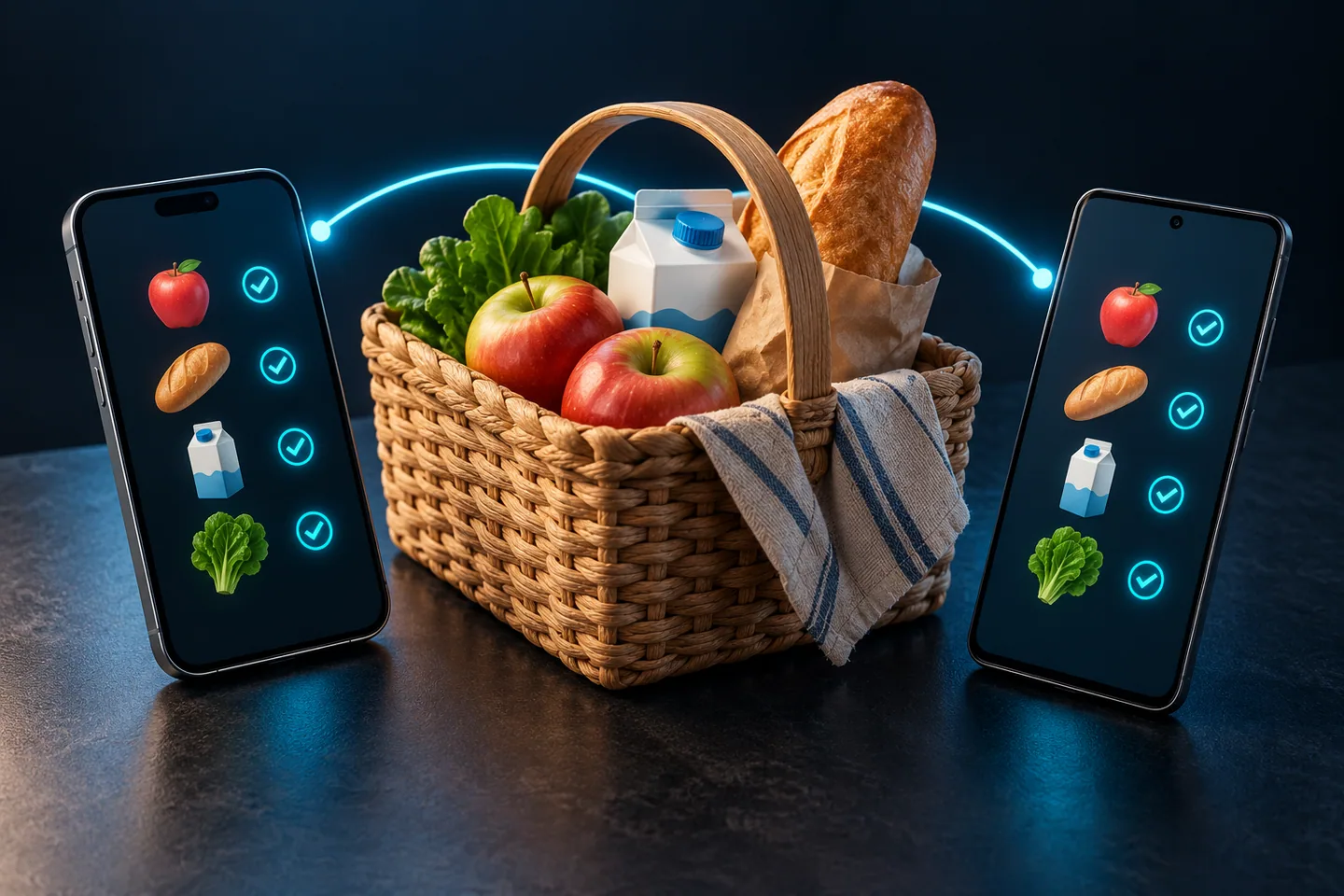
When several people have the same list open, changes are delivered to the other participants while a connection is available. A product added, changed or checked off appears without a full page reload.
The bot also shows available lists in chat. A user can switch an item between ⬜ and ✅ and the message updates in place. The Mini App manages the complete workflow; the bot provides fast access and notifications.
The catalog is more useful than an empty input
KupiSpisok searches normal groceries, prepared dishes, household products and custom user items from one field. The initial data set includes 180 products, 96 dishes, 22 categories, 491 ingredient records, 14 store departments and 10 starter templates.
Frequently purchased products and previously selected dishes rise in recommendations. This is statistical personalisation rather than artificial intelligence, so the interface does not mislabel it as AI.
Multi-user details that make the service real
The difficult questions are not button colours but permissions and conflicts: who may rename or remove a list, what an invited person sees, what happens when the owner leaves, how duplicate rows are prevented and how two simultaneous actions are resolved.
PostgreSQL is the source of truth; the browser keeps only small auxiliary settings and a short cache. The admin interface separates Telegram and MAX audiences and supports search and activity segments. A mailing first calculates its audience and then asks for confirmation, but user consent and platform rules remain mandatory.
Authentication, lists, invitations, recipes, family permissions, synchronisation, bots and mailings are covered by automated checks. On July 22, 2026, all 36 control tests passed.
How this pattern applies to a business Mini App
Replace groceries with a company's catalog, a recipe with a bundle or service, a family group with a customer team and a shopping list with an order, enquiry or project.
A Mini App can provide categories, filters, product cards, variants, stock, favourites, cart, delivery, order history and status. The bot opens the right section and sends updates. The backend passes the order to CRM, ERP, warehouse or another operating system.
An AI assistant can be useful at a specific decision point: it clarifies the request and selects items from current catalog data. Price, stock and compatibility must still come from reliable sources, and a specialist receives the conversation when information is insufficient.
If you need a similar product for your company, see Telegram and MAX bot development.