Selling flowers through specialized delivery marketplaces and multi-category aggregators looks frictionless at first glance: account registration is free, onboarding takes a couple of hours, and initial orders arrive the very next morning. But when a shop owner reviews monthly balance sheets taking into account basic commissions, merchant acquiring, mandatory promotional discounts, and 22% VAT on platform fees, the reality becomes stark: the intermediary takes nearly 30% of gross order value, while client contact data remains locked behind the platform's proprietary wall.
In this guide, we break down real 2026 numbers: how much a florist actually earns from a typical RUB 4,000 bouquet across different channels, why search algorithms and AI overviews increasingly prioritize independent local florists, and how to use flower care envelopes combined with Telegram and MAX Mini Apps to legitimately turn marketplace recipients into repeat direct customers.
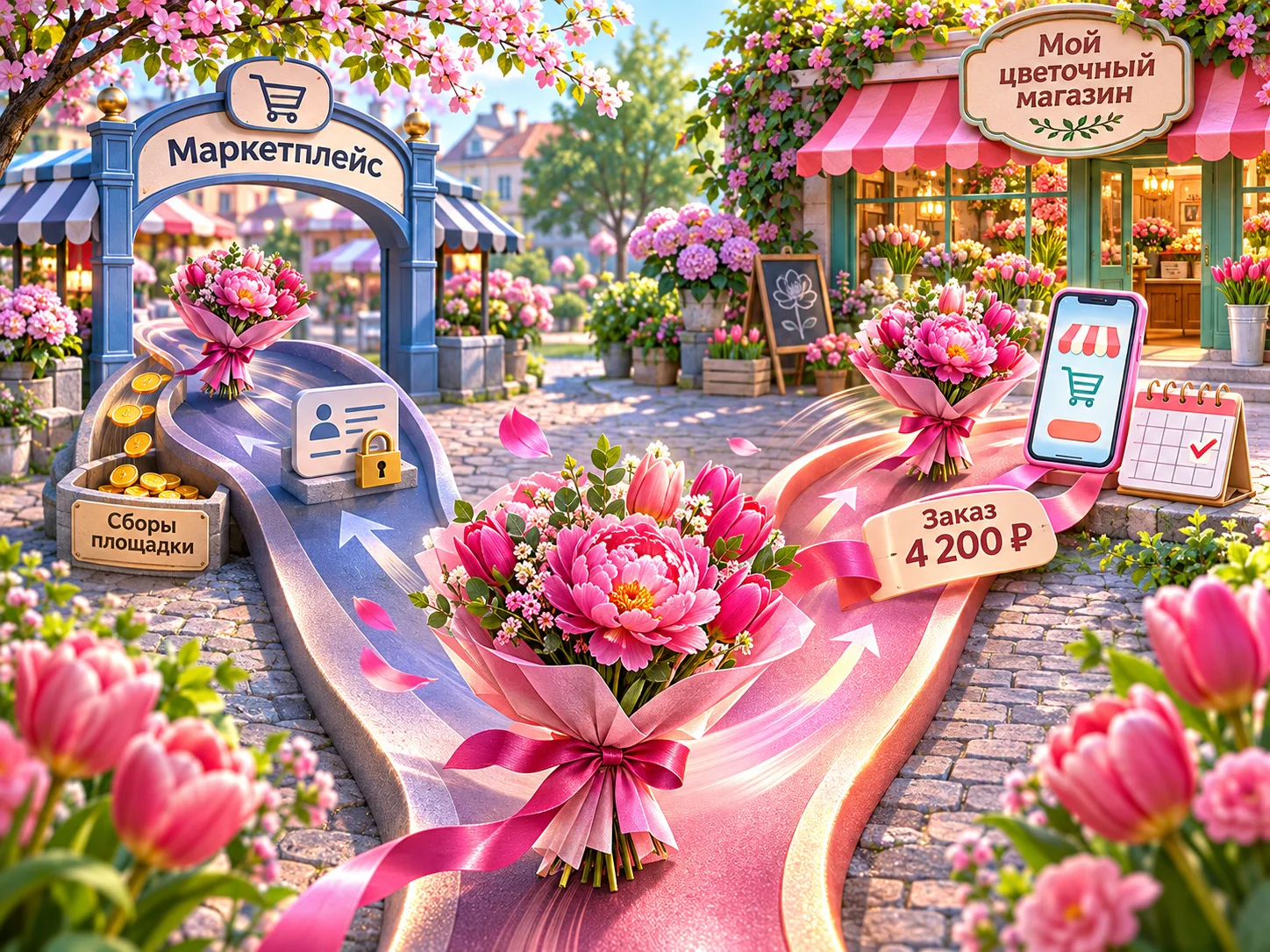
Short answer: how to allocate sales channels without surrendering all profit to intermediaries
If you need a quick roadmap for your floral business:
- Aggregators and delivery marketplaces (Flowwow, Yandex Market, Kuper). Keep their share strictly within 10–15% of total turnover. Use them solely as an acquisition channel for new local buyers, rather than a permanent operational foundation.
- Your own fast website and verified Map listings (Yandex Maps, 2GIS, Google Maps). The primary acquisition engine for high-margin local customers. Generates steady organic search traffic from buyers looking for local flower shops near hospitals, wedding venues, or business centres without paying per-click fees.
- Dedicated Mini App in Telegram and MAX. The most effective tool for recurring orders and retention. When a customer receives automated reminders for loved ones' birthdays with a 1-click catalogue and instant QR payment, conversion to repeat purchase reaches 60–80%.
What is happening in the floral retail market: key data and 3 purchasing scenarios
The floral retail market is driven by three distinct purchasing patterns:
- Urgent impulse delivery ("Right now"). The customer forgot an anniversary or needs emergency flowers delivered within 60 minutes. They open delivery apps or maps and choose the closest shop with immediate courier availability.
- Planned gift purchases (Birthdays, corporate events, Mother's Day, 8 March). Customers place orders 2–5 days in advance, expecting bespoke styling, exact flower varieties, and photo confirmation before dispatch.
- Corporate subscription orders. Regular weekly arrangements for restaurants, beauty salons, and corporate offices that require transparent invoices and reliable schedules.
What global floral pioneers teach us: The Bouqs Co. and Bloom & Wild
Global industry leaders like The Bouqs Co. and Bloom & Wild built multi-million dollar businesses not by paying commissions to third-party marketplaces, but by mastering customer retention:
- Over 60% of their annual revenue comes from recurring purchases and subscription gifting.
- Customers save birthdays and anniversaries into personal accounts once, after which automated reminders arrive 3–5 days prior with pre-selected bouquet recommendations.
- By eliminating platform intermediaries, they reinvest savings into superior farm-fresh blooms, luxury packaging, and proprietary technology.
The real economics of marketplaces: how much a florist keeps from a RUB 4,000 bouquet
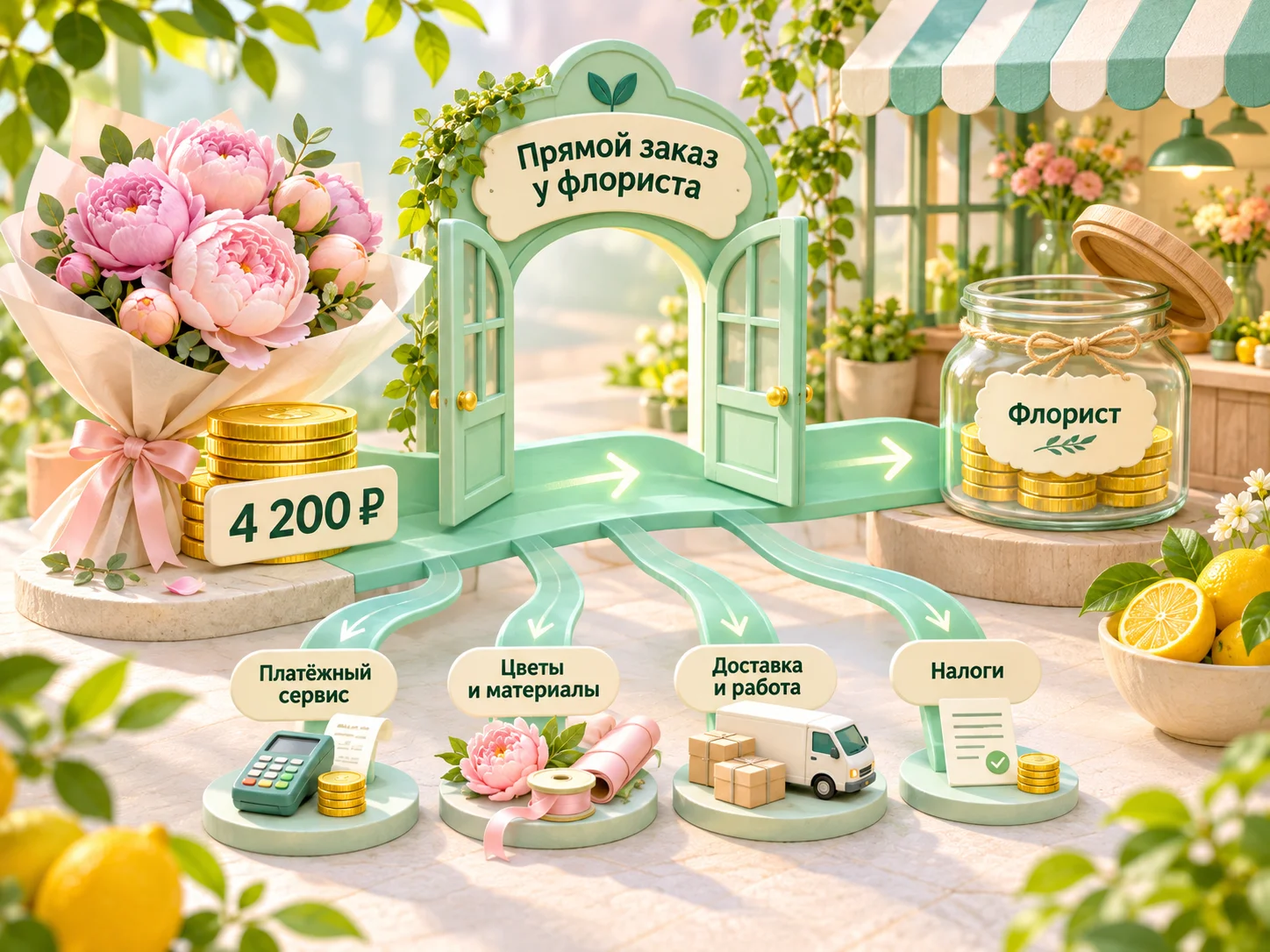
Let's examine the real unit economics of a bouquet sold for RUB 4,000 (+ RUB 200 delivery fee) across intermediary platforms versus direct channels.
| Expense item | Marketplace sale (e.g., Flowwow / Aggregator) | Direct sale via Website / Mini App |
|---|---|---|
| Gross payment from buyer | RUB 4,200 | RUB 4,200 |
| Base platform commission (15–22%) | RUB 630–924 | RUB 0 |
| VAT on commission (22%) | RUB 138–203 | RUB 0 |
| Payment acquiring fee | Included or RUB 120 (3%) | RUB 17–30 (0.4–0.7% via SBP) |
| Mandatory promotional discount (10%) | RUB 420 | RUB 0 (or discretionary loyalty points) |
| Direct courier payout | RUB 200 | RUB 200 |
| Total intermediary deductions | RUB 1,188–1,250 (28–30%) | RUB 17–30 (0.5–0.7%) |
| Net cash received by floral workshop | RUB 2,950–3,012 | RUB 4,170–4,183 |
| !Calculating bouquet profit on a marketplace with commission and VAT | !Calculating bouquet profit for direct orders via website or Mini App | |
| *Selling a RUB 4,200 bouquet through a marketplace incurs up to RUB 1,250 in platform deductions (~30%)* | *Direct orders via website or Mini App with SBP fast payments incur only RUB 17–30 in processing fees (0.4–0.7%)* |
Flowwow commission breakdown in 2026: VAT 22%, mandatory bonuses, and rating penalties
Many florists assume commission is simply 15%. However, in 2026:
- Basic category commission averages 15–20% depending on city tier.
- Russian tax regulations apply 22% VAT on all digital service fees charged to legal entities.
- Maintaining top search visibility within the app requires funding a mandatory 5–10% customer bonus programme.
- Late status updates or photo rejections trigger platform penalties and algorithmic demotions.
- Total realized deductions routinely reach 28% to 32% of gross order value.
Multi-category delivery aggregators (Kuper, Yandex Eda, Yandex Market) and the safe 10–15% ceiling
Universal food and grocery aggregators bring significant impulse volume during peak holidays. However, relying on them for over 15% of your turnover creates dangerous operational vulnerability:
- You do not own customer contact numbers; masked virtual numbers expire 30 minutes after delivery.
- If the platform algorithm changes or promotes a competitor willing to pay 35% commission, your revenue collapses overnight.
- Treat aggregators strictly as paid customer acquisition, immediately migrating recipients into your private database.
Your own website, maps, and Telegram & MAX Mini Apps: how they reinforce each other
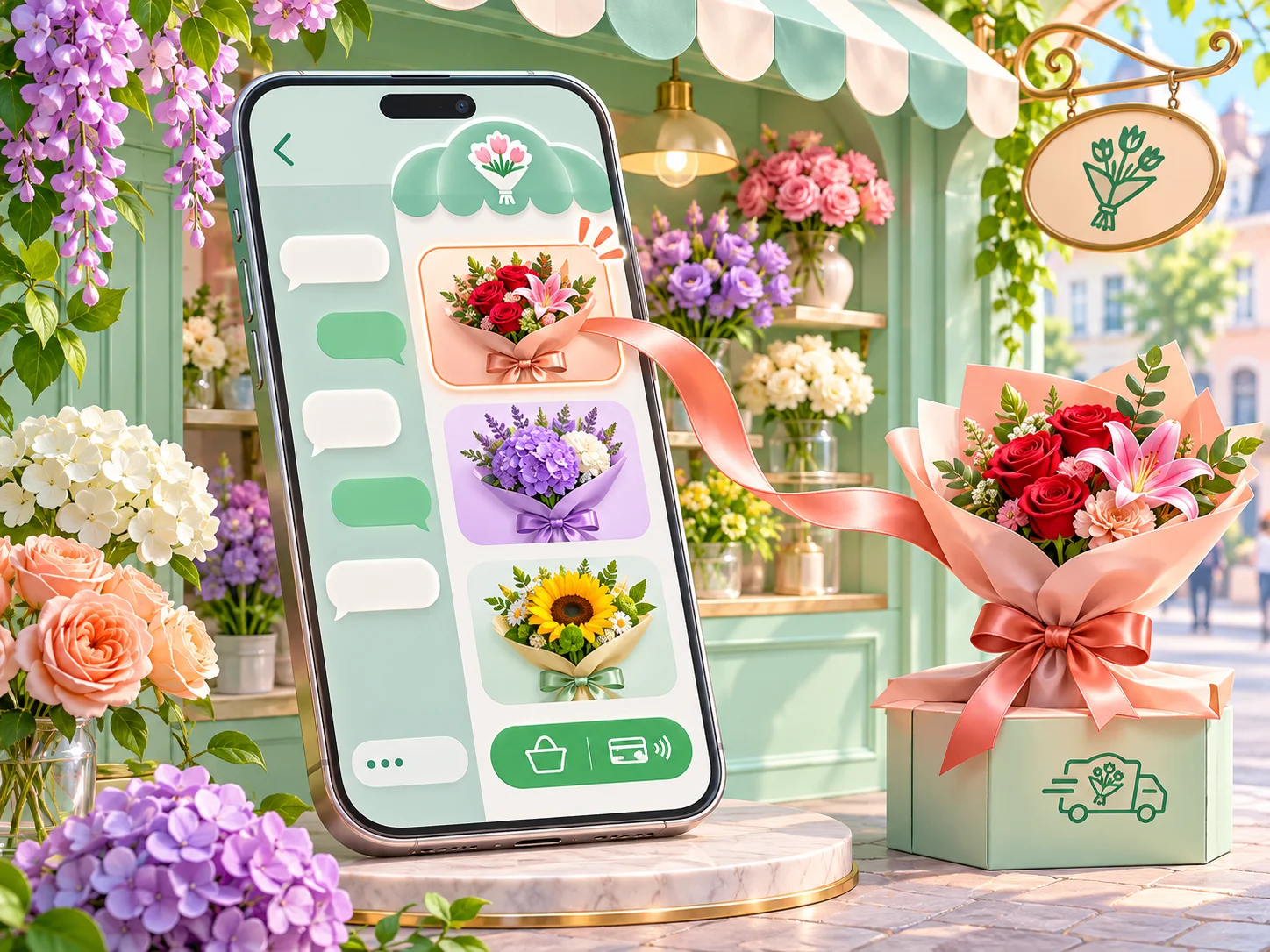
1. Website and verified Map profiles: free organic acquisition from search and AI overviews
When someone searches "flower delivery near me" or "order peonies Cheboksary", search engines display verified local maps and fast, mobile-friendly websites:
- Local map pins with hundreds of real photos and reviews capture immediate geographic intent.
- An independent multi-page website built on modern lightweight architecture (such as Astro) loads in 0.5 seconds, providing dedicated catalog pages for roses, mixed bouquets, and corporate arrangements.
- Search engines and AI overviews cite local business websites directly, delivering high-intent organic visitors with zero per-click ad cost.
2. Why repeat buyers prefer Telegram and MAX Mini Apps
Once a customer has ordered once, requiring them to search Google, remember a domain name, or download a heavy 80 MB native mobile app creates unnecessary friction:
- Instant launch: A Mini App opens directly inside Telegram or MAX in 300 milliseconds without installation.
- Native familiar interface: Buyers browse visual catalog carousels, select bouquet sizes, and pay via one-click SBP QR codes.
- High message open rates: Push notifications in messenger channels boast an 85–92% open rate, compared to less than 18% for email marketing.
4 features that maximize floral revenue and average order value
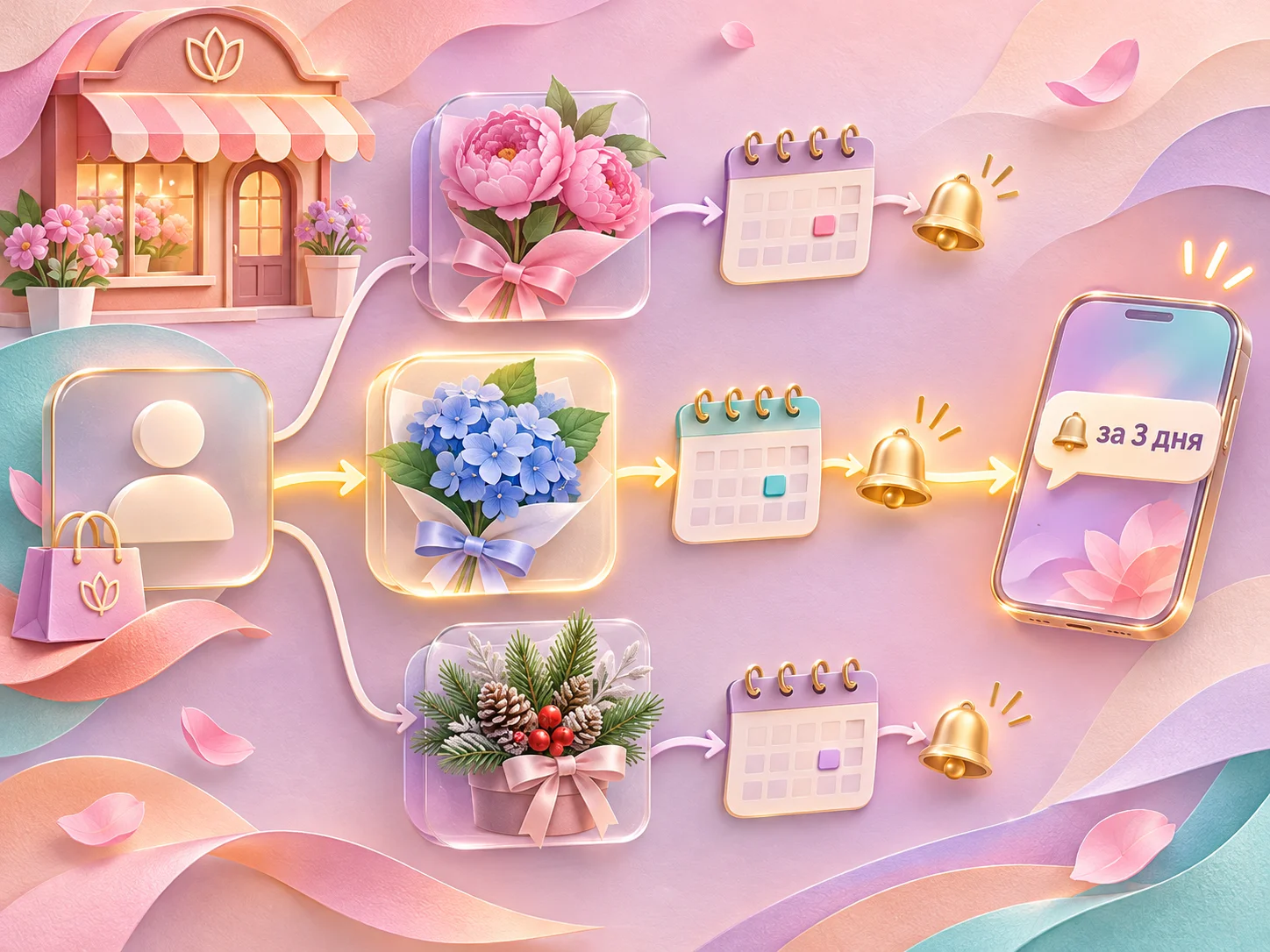
1. Authentic assembly photo sent to chat before courier dispatch
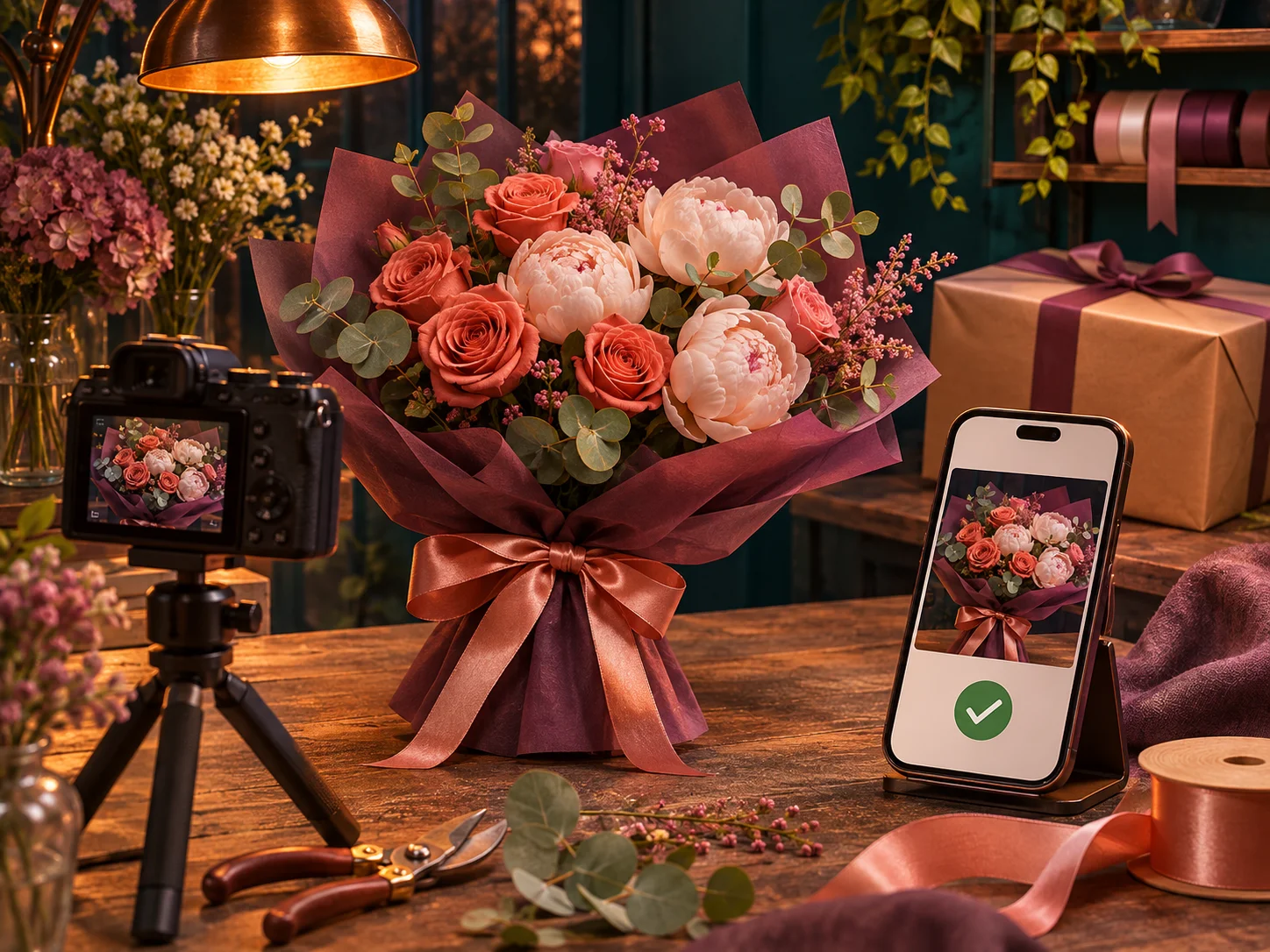
The single biggest anxiety for a gift sender is receiving an arrangement that looks nothing like the promotional photo. Sending a crisp smartphone photo of the assembled bouquet on your workshop bench before courier pickup eliminates dispute claims, builds immense trust, and drives 5-star reviews.
2. Date calendar for loved ones (60–80% conversion and +RUB 700 average check)
Most people struggle to remember distant anniversary dates, mothers-in-law's birthdays, or colleagues' milestones until the morning of the event:
- During checkout or inside the bot, invite the user to enter 2–3 annual dates: *"Save your mother's and partner's birthdays: we will remind you 3 days in advance and reserve the freshest peonies."*
- 3 days before the date, the bot delivers a personalized message with 3 curated arrangements.
- Over 60% of users who save dates place a repeat order through this automated reminder.
3. Thoughtful "Do not remind me about this holiday" toggle
During romantic holidays (Valentine's Day, etc.), users who recently experienced a breakup or personal bereavement are deeply alienated by cheerful promotional blasts. Offering a discreet "Opt out of Valentine's Day reminders" button demonstrates genuine customer empathy and dramatically reduces bot blocks and unsubscriptions.
4. SBP QR payment and 3 size options in every bouquet card
- SBP fast payment: Reduces merchant transaction fees from 2.5–3.5% down to 0.4–0.7%, keeping hundreds of thousands of rubles in the florist's pocket annually.
- 3 size options (Compact / Standard / Deluxe): Offering size tiers for each design increases average order values by 18–25%, as many customers upgrade to Deluxe when shown clear stem count differences.
How to legitimately convert marketplace customers into your direct bot & Mini App
Marketplace rules prohibit florists from including marketing flyers in orders dispatched to direct customers. However, the gift recipient is legally not the marketplace's customer: they did not create an account or sign terms of service. Furthermore, during store pickups, the customer is physically present.
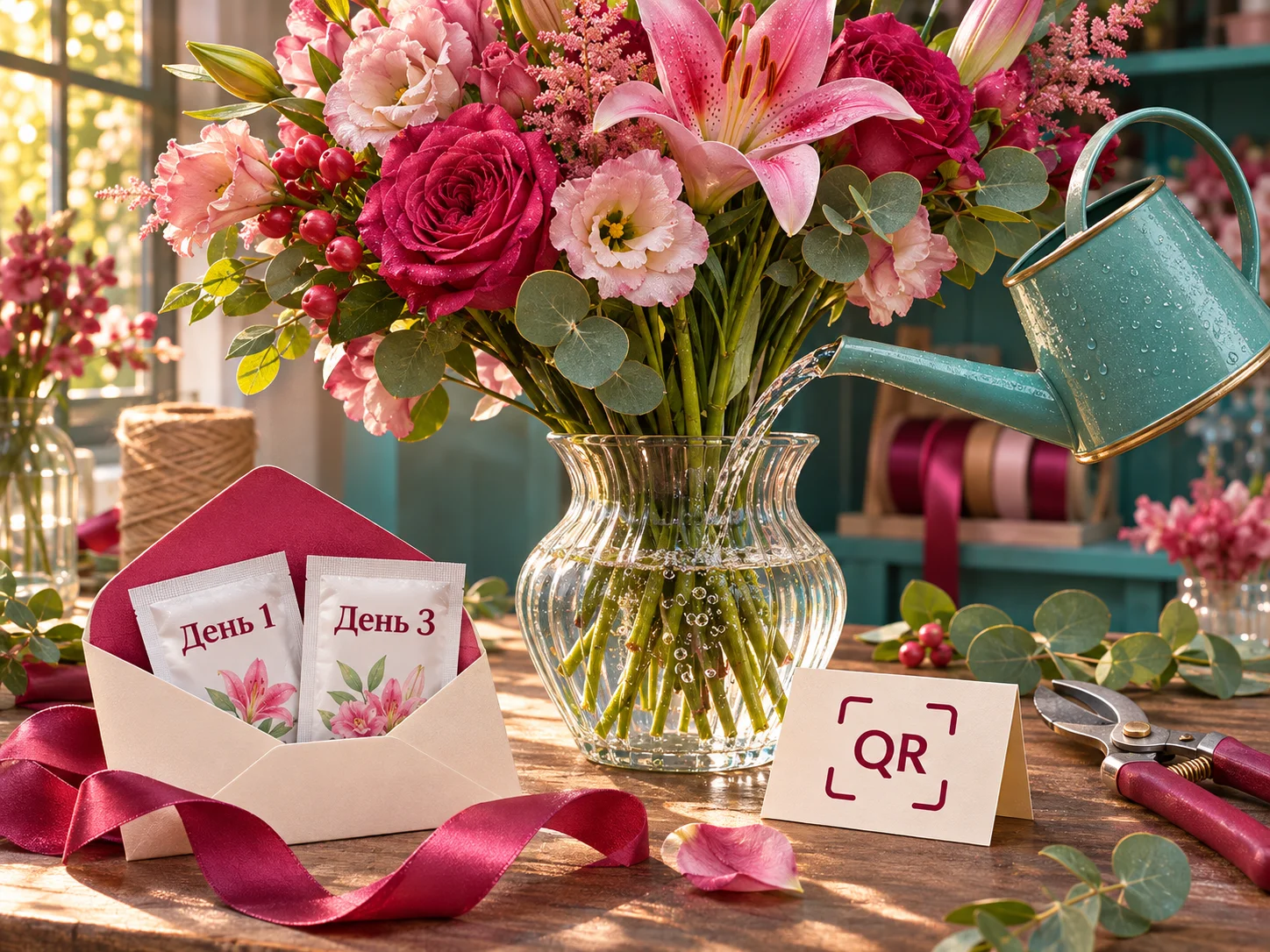
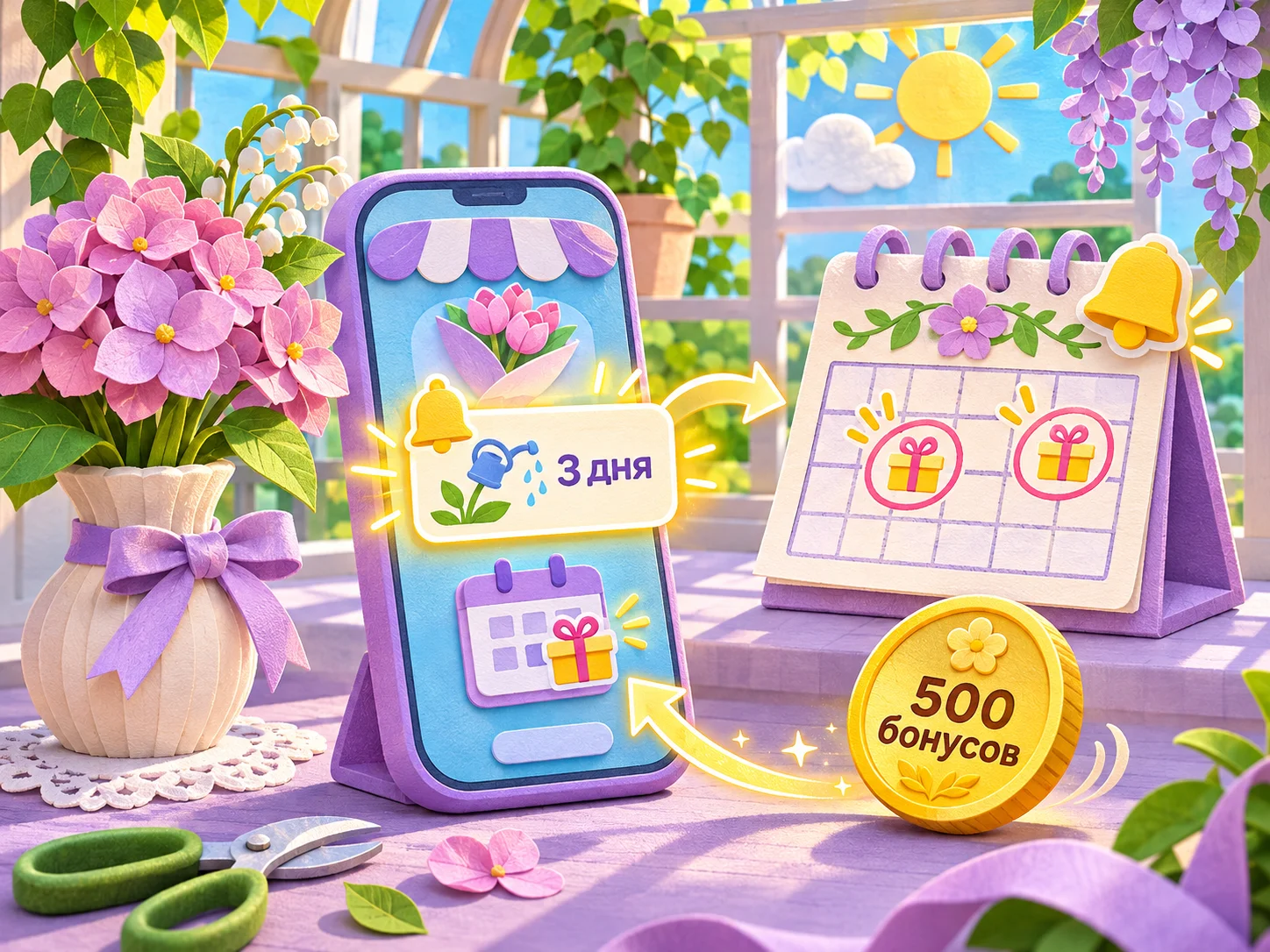
Converting bouquet recipients (and pickup customers): 3-step care envelope framework
- Step 1. Care envelope with two flower food sachets ("Day 1" and "Day 3"). Attach a stylish envelope titled *"The Secret to Keeping Your Bouquet Fresh for 3 Weeks"* containing two floral preservative sachets (Chrysal). The front displays two QR codes (Telegram and MAX): *"Scan to activate your reminder: the assistant will notify you to change water and add sachet #2 in 3 days, plus credit RUB 500 towards your direct orders."*
- Step 2. Immediate welcome bonus and date collection. Scanning launches the Mini App, instantly crediting RUB 500 in loyalty points and presenting a two-field form: *"Add 2 family birthdays to double your welcome bonus to RUB 1,000 and receive reminders 3 days ahead."*
- Step 3. Direct ordering with pre-dispatch photo proof. The next time this recipient needs to send flowers, they bypass third-party marketplaces and order directly from your workshop in 60 seconds with zero intermediary markup.
Implementation costs across channels in 2026: investments vs return
| Channel | Setup cost | Ongoing monthly cost | Typical commission / CAC | Customer ownership |
|---|---|---|---|---|
| Marketplaces (Flowwow, etc.) | RUB 0 | RUB 0 | 28–32% of each order | Intermediary owns client |
| Delivery aggregators (Kuper, Eda) | RUB 0–5,000 | RUB 0 | 25–35% of each order | Intermediary owns client |
| Fast Astro website + Maps | RUB 45,000–85,000 | RUB 500–1,500 (hosting) | Free organic search / SEO | 100% your asset |
| Telegram & MAX Mini App | RUB 35,000–70,000 | RUB 1,000–3,000 | 0.4–0.7% (SBP acquiring) | 100% your database |
4-month implementation roadmap for a flower shop owner
- Month 1: Foundation and local map visibility. Audit Yandex Maps, 2GIS, and Google Maps. Upload 50+ real bouquet photos, set up accurate delivery zones, and print care envelopes with Chrysal sachets and QR codes.
- Month 2: Launching Telegram and MAX Mini App. Deploy an intuitive Mini App storefront with SBP payment, pre-dispatch photo notifications, and an automated birthday reminder calendar.
- Month 3: Modern fast website. Launch an Astro-based catalog website with fast mobile loading and local SEO pages for main bouquet categories.
- Month 4: Nurturing sequence and corporate outreach. Activate automated anniversary reminders and reach out to local corporate clients for weekly office deliveries.
Frequently asked questions
Should we completely disconnect from Flowwow and aggregators once our website and bot are live?
No. Aggregators remain a valuable channel for introducing your workshop to new clients who are unfamiliar with your brand. The key is never depending on them for survival: maintain them as a secondary source (10–15% of volume), while methodically funneling recipients into your private database via care envelopes and Mini Apps.
How do sole proprietors and self-employed florists handle marketplace taxes?
Marketplace sales involve agency contracts: the platform reports the full retail price paid by the customer, not the net payout after commissions. Self-employed individuals must calculate taxes on the gross order sum at 6% (B2B agency rate) rather than 4%. Factor this tax structure into your retail pricing on aggregator platforms.
How many bots can a floral business officially register in MAX messenger?
Under current business platform guidelines in MAX, self-employed individuals can register up to 2 bots, while registered individual entrepreneurs (IP) and corporate entities (LLC) can register up to 5 bots. One or two bots (a primary customer storefront and an internal florist notification channel) are typically sufficient for a flower shop.
What is better for a flower shop website: website builders like Tilda or custom code (Astro)?
If you want to test demand in 3 days, a website builder works (costing RUB 6,000–12,000 annually in subscription fees). However, if you require instant mobile loading on weak networks, top rankings in search engines and AI overviews, and zero recurring platform fees, an Astro architecture is far more advantageous. It matches website builders in setup cost while delivering significantly faster speeds and complete ownership.
Key takeaways
In the floral business, long-term profitability belongs not to shops that surrender 30% of their margin to aggregators or burn holiday earnings on inflated ad bids, but to florists who turn every initial delivery into an ongoing cycle of celebrations.
The winning floral formula in 2026:
marketplaces for initial discovery only (up to 15% share) + independent fast website and Maps for free search & AI discovery → care envelope with 2 flower food sachets and QR code in every bouquet → customer onboarding into Telegram & MAX Mini App → automated anniversary reminders, pre-dispatch assembly photos, and SBP payments without middleman fees.
This model guarantees that peak holidays yield genuine net profit, while everyday operations stay consistently booked with loyal repeat orders.
Websites and Mini Apps in Telegram and MAX for flower shops and delivery services: developing high-speed floral online stores with regional SEO structure for Google, Yandex, and AI overviews, alongside unified Mini App catalogs in Telegram and MAX featuring SBP payments, anniversary reminder calendars, and pre-dispatch photo confirmations. Learn more in our turnkey landing pages, multi-page websites, and business bots & Mini Apps sections, or contact Roman Mikhaylov, developer.