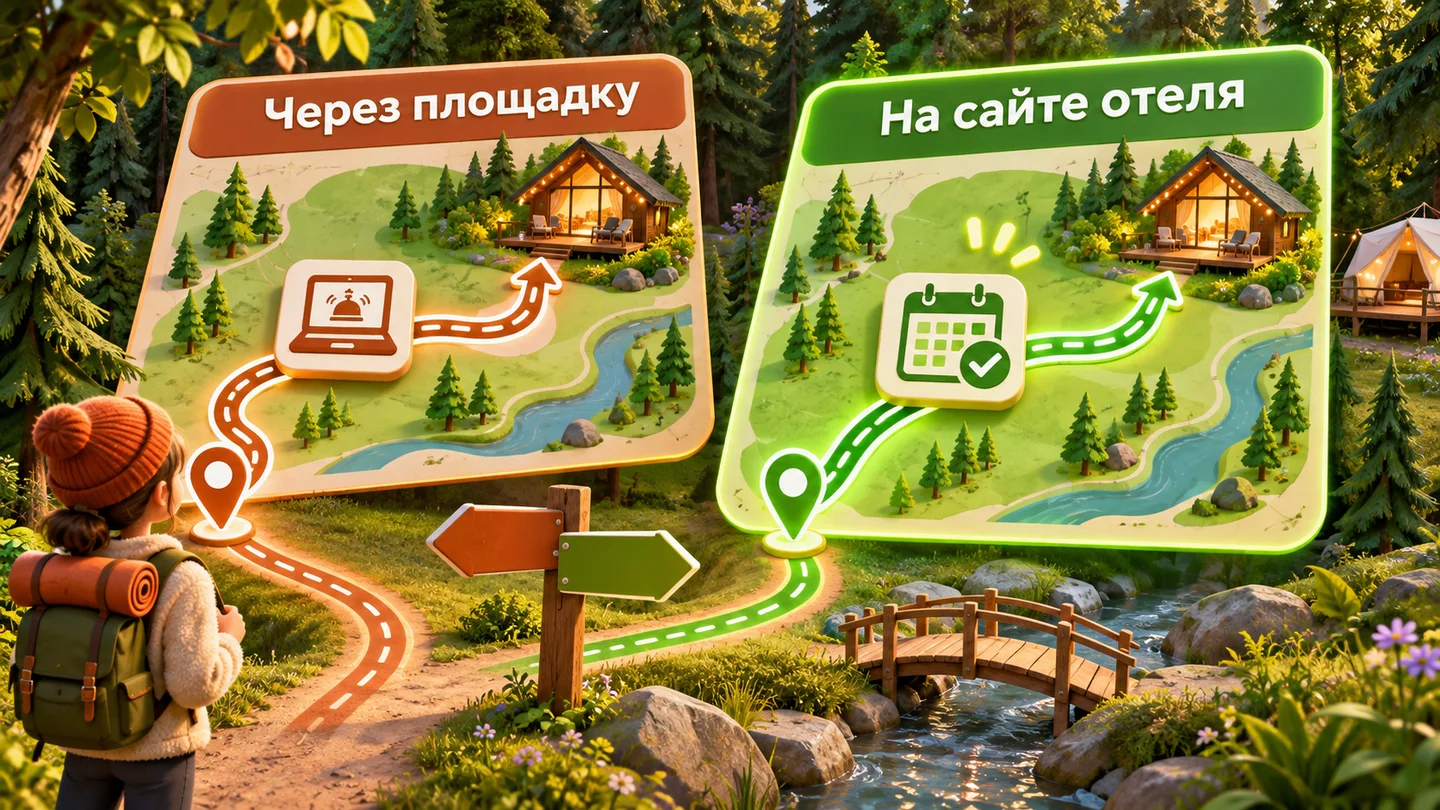
A hotel pays an online travel agency to be discovered and booked. That can be a fair price for reaching a new guest. It is more expensive when someone already knows the property, finds its official website and still returns to the agency because the website is harder to book.
The goal is to give each channel a job. Use agencies for discovery and to fill dates where you need demand. Make the official website good enough to capture guests who already want to stay with you. Then use the guest relationship to sell useful extras and make repeat visits easy.

Choose a channel mix for the property
A city hotel often needs agencies to reach first-time visitors, business travellers and people comparing a large number of properties. Make sure a guest who searches for your name can find the official site, current rates and a live booking engine. Give frequent guests an easy route back to their last room type.
A country hotel, cottage resort or glamping site has more to explain. Guests want to know how far the cabins are from one another, whether the road is usable in winter, what a family can do, and whether a hot tub is available on their dates. The website can show the territory and answer these questions in more detail than a listing. A property with a strong direct offer can still use agencies to sell low-demand dates.
Compare the full cost of a booking
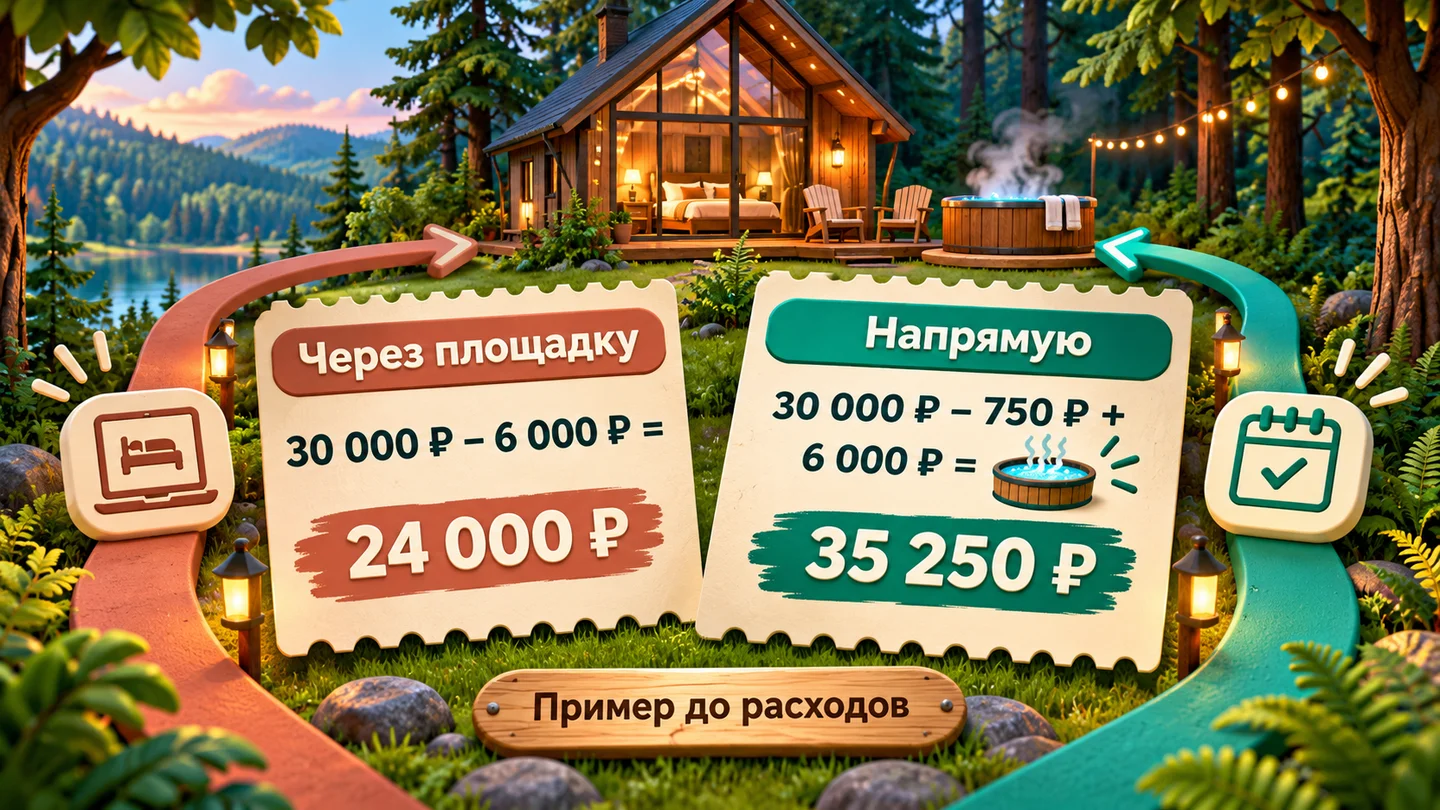
Include agency commissions, payment processing, the booking engine, advertising and the people who answer enquiries. A booking bought through an expensive search campaign can cost more than one from an agency. An existing guest who books through a link in a message has a different cost again.
Separate branded and non-branded demand. Someone searching for your hotel by name has already found the property. A guest searching for “weekend cottages near the city” is still comparing destinations. Run and measure these campaigns separately so inexpensive branded conversions do not conceal the cost of attracting a new guest.
The following model uses a property with 15 units and RUB 35.6 million of annual room revenue. All three scenarios use the same room revenue. Only the booking mix and acquisition costs change.
| Annual item | 80% agency | 50% agency | 20% agency |
|---|---|---|---|
| Agency commissions at about 18% | RUB 5,126,000 | RUB 3,204,000 | RUB 1,282,000 |
| Direct booking and payment fees | RUB 263,000 | RUB 659,000 | RUB 1,054,000 |
| Direct marketing | RUB 215,000 | RUB 1,245,000 | RUB 1,850,000 |
| Fixed booking and marketing tools | RUB 180,000 | RUB 180,000 | RUB 180,000 |
| Total acquisition costs | RUB 5,784,000 | RUB 5,288,000 | RUB 4,366,000 |
| Room revenue after these costs | RUB 29,816,000 | RUB 30,312,000 | RUB 31,234,000 |
The strong direct scenario leaves RUB 1.418 million more room revenue after acquisition than the agency-heavy scenario. The result depends on bringing guests back, converting branded demand and keeping direct marketing costs under control. Compare the figures with your actual commission contracts, occupancy and share of returning guests.
Fix the seven points where the official site loses a booking
- A form instead of live availability. Let the guest see which rooms are available for their dates, the full stay price and the terms. A request for a callback can remain useful for groups or complicated bookings.
- Inconsistent rates across weekdays and weekends. Test real stays that begin on one tariff and end on another. The booking engine should calculate the whole stay and show available rooms without forcing the guest to try random date combinations.
- A difficult payment step. Offer the payment methods your guests use and show when a deposit or full payment is due. Test the booking and confirmation on a phone.
- An agency listing with a clearer offer. Publish direct benefits that are compatible with the property’s agreements. A flexible option, an included extra or a clear cancellation policy can be worth more than a small discount.
- Room descriptions with too little context. Show real photos, sleeping arrangements, a site map and what a visit looks like. State whether pets are accepted, how to get there and where the sauna or play area is.
- Better rooms held back from the website. Decide which inventory goes to each channel and keep it synchronised. A guest who finds a better cabin on an agency site has a reason to leave the direct site.
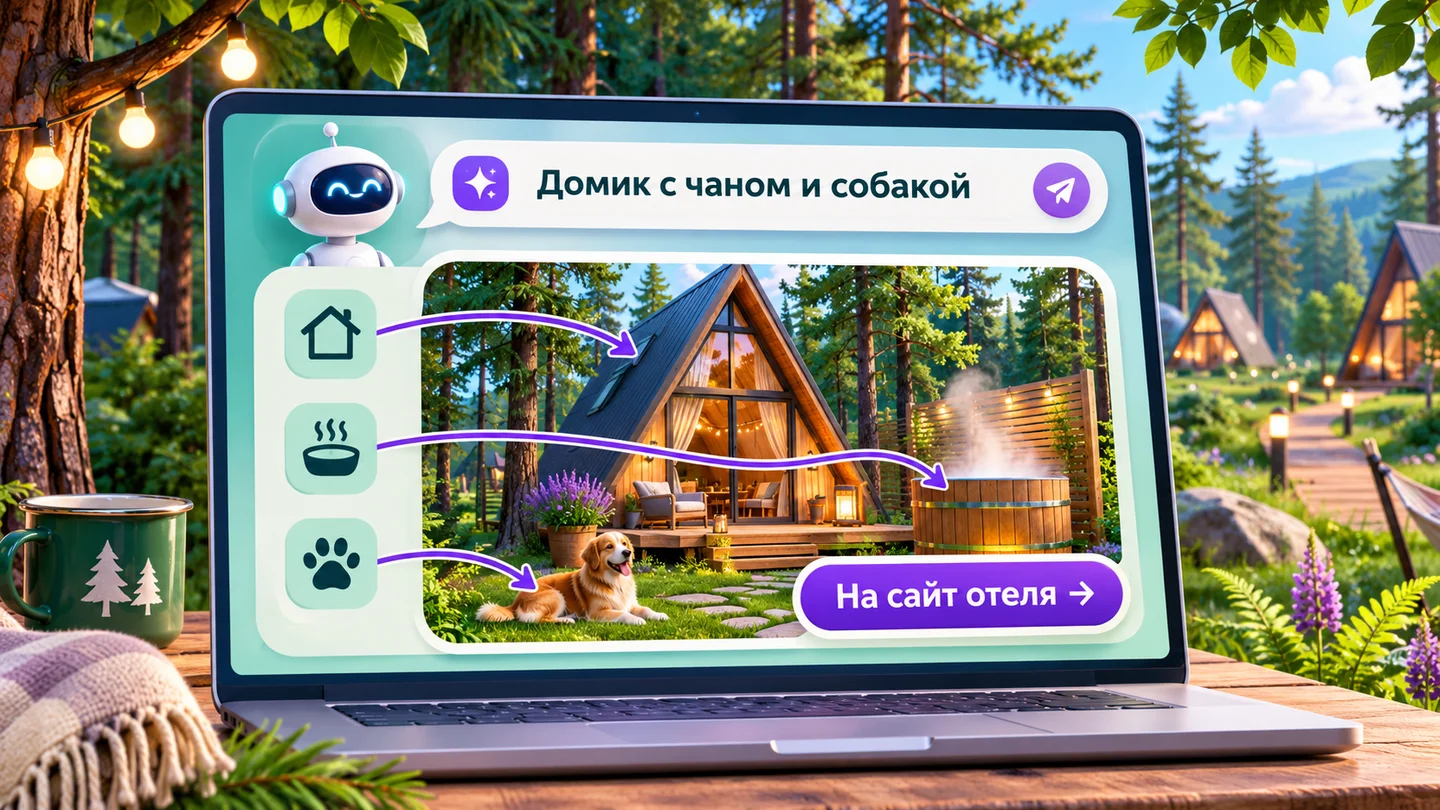
- No answer when the guest is ready to book. Put frequent questions on the site and offer a clear path to a human. An AI assistant can answer from approved property information and pass a request to the team. Keep prices and live availability tied to the booking system.
The examples below show a booking engine and a property assistant working together.

Capture guests from maps and AI search
Check the official website and booking links on Yandex Maps from a guest’s phone. A booking button can lead through a third-party service. Identify where it goes, which terms apply and whether an official website link is easy to find. Use tracking parameters on links you control, then compare completed bookings by source.
A small property can answer specific questions in more detail than a large comparison page. Someone may need a cabin that accepts a large dog, has a private hot tub and is reachable by train. Describe those combinations where they genuinely apply. Give answers in ordinary text with current photos and clear terms.
Use consistent property details on the site and map listings. Explain the types of accommodation, location, accessibility, house rules, direct booking steps and extras. Structured data can describe the property and help search systems understand the page. Keep the visible information accurate so a reader can verify the answer.
Use Telegram and MAX throughout the stay
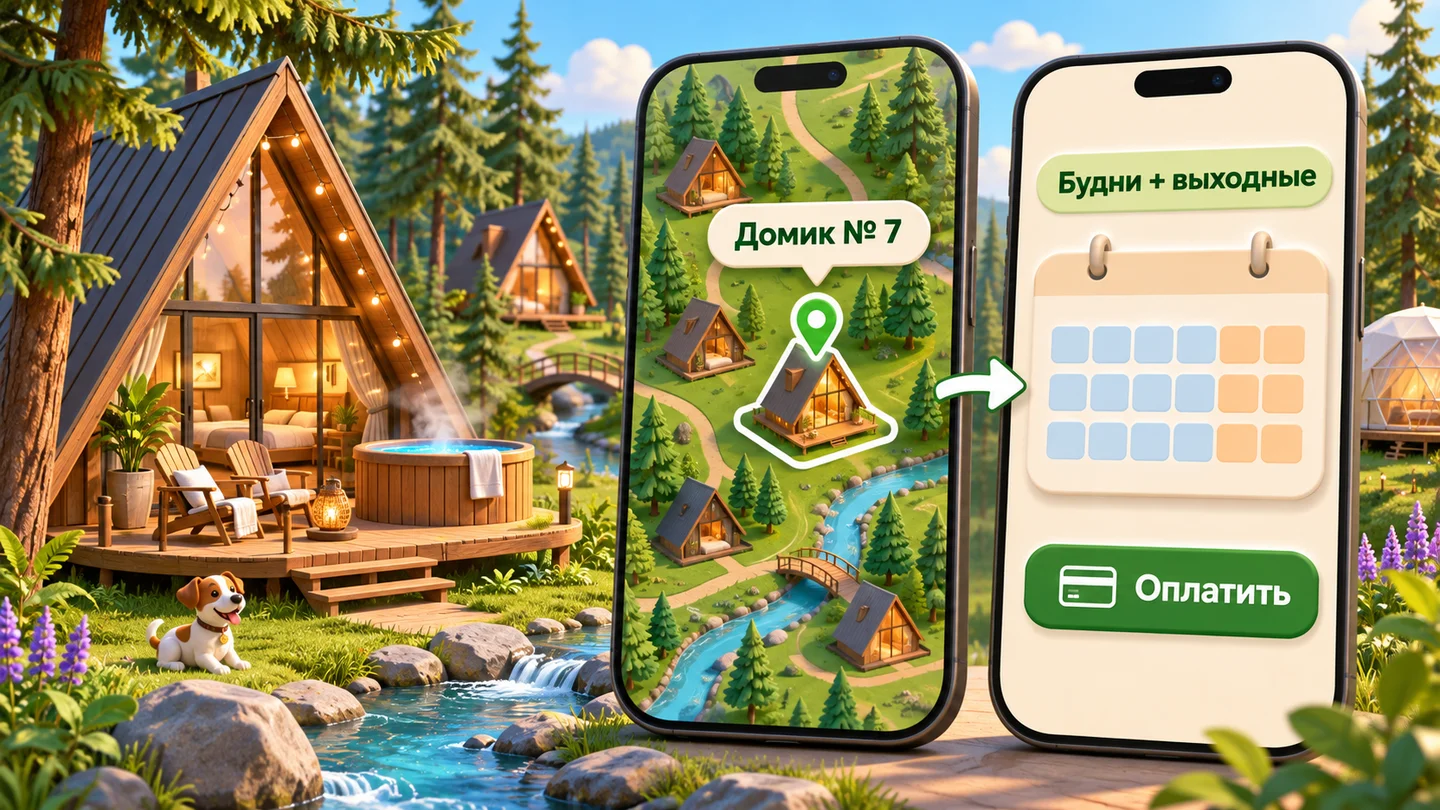
Send the booking confirmation with directions, arrival hours and a way to contact the property. A Mini App can give the guest access to their booking, the site map and available extras. The property management system should remain the source of room availability and booking state.
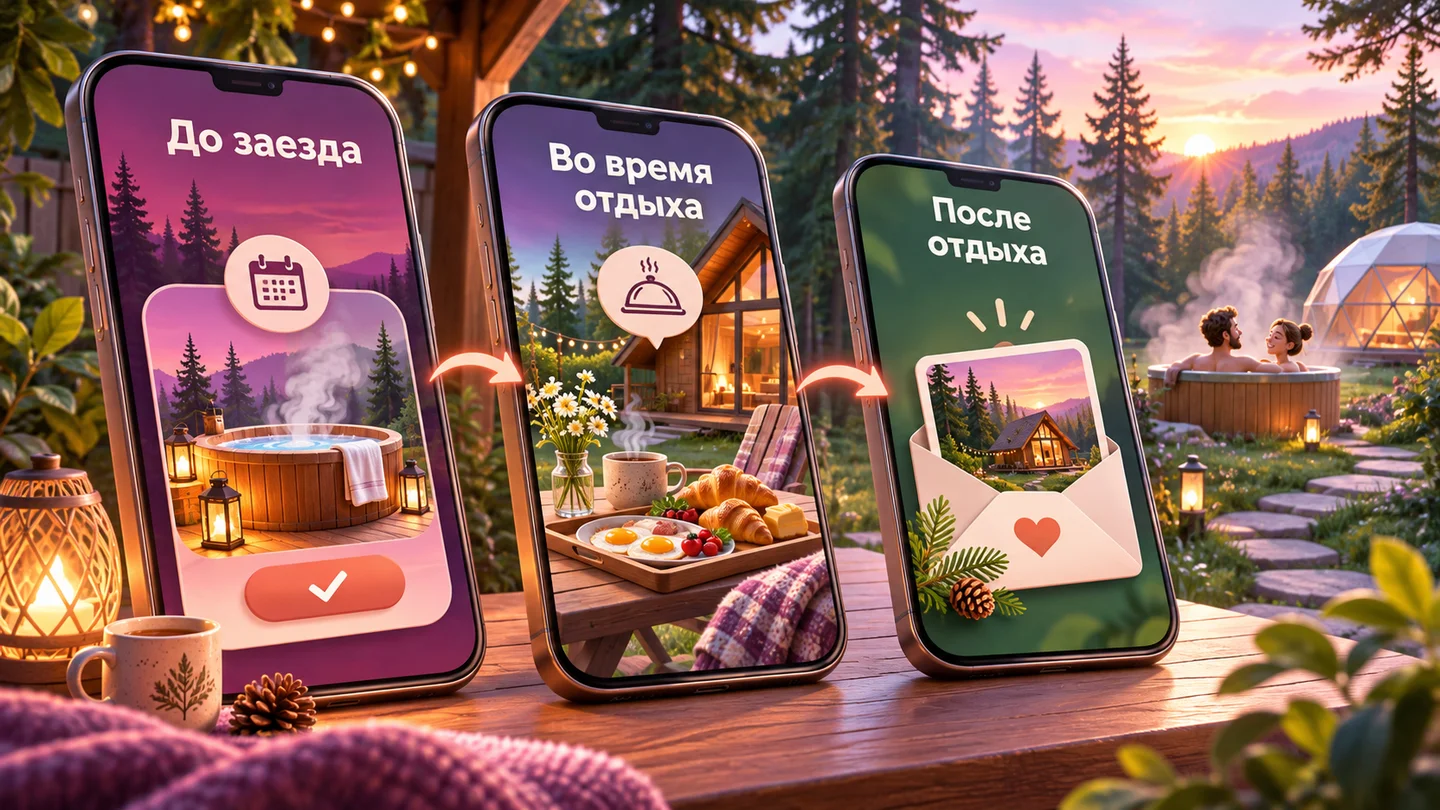
Offer an extra at a useful moment. A guest who has chosen dates can reserve the sauna or hot tub if its schedule is available. An arrival message can explain parking and key collection. During the stay, the guest can ask for help or see activities that are actually running. After departure, a short thank-you message can link back to the direct site.
Where the property has an approved digital identity or check-in workflow, connect it to the relevant provider and staff process. Keep a staffed check-in path for guests who need it. The Mini App is also useful for information and extras when identity verification remains at reception.
Budget for the parts that earn their place
Start with the official website, a booking engine connected to inventory, map links and measurement. Price a guest assistant, an extras calendar and a Mini App separately. Look at setup, subscription costs, booking fees and the work required to keep the content accurate.
Bnovo and TravelLine are examples of booking and property management systems used in the Russian market. Ask each provider to demonstrate the full guest journey with your room types and rate rules. Compare the resulting fee for a real booking, how inventory is synchronised and how cancellations are handled.
Calculate payback from bookings that shift to direct channels, after payment and marketing costs. Add the gross profit from extras you can fulfil and measure. Compare the same occupancy period and property type so seasonality does not look like a change in channel performance.
A four-week rollout
- Week one. Measure current bookings by channel and make a test booking on the official website. Check map links, cancellation terms and the mobile payment step.
- Week two. Fix date and tariff rules, confirm inventory synchronisation and improve the room and property descriptions. Add the information guests ask for before they book.
- Week three. Connect the direct booking route from maps and separate branded search from new demand. Give reception a way to see enquiry sources and booking outcomes.
- Week four. Add useful pre-arrival messages and a small set of extras. Review booking completion, cancellations, direct acquisition cost and repeat bookings. Keep enough agency inventory to protect occupancy while you learn.
Frequently asked questions
Should the hotel leave Yandex Travel or Ostrovok?
Keep the channel if it brings guests you would otherwise miss or helps sell low-demand dates. Measure how much those bookings contribute after commissions. Use the official site for people who already know the property and for guests who return.
Which booking system should a small property choose?
Compare how the systems handle your rate calendar, shared inventory, deposits and paid extras. Ask for a mobile demonstration using a real weekday-to-weekend stay. Compare the total cost after subscriptions and booking fees.
Does a small hotel need check-in through MAX?
The useful starting point is a clear booking and arrival process. Choose digital check-in when the property can support the applicable identification requirements and the provider offers a working flow. A guest assistant can already handle directions and extras without replacing reception.
Make direct booking easier for the guest
A good direct channel gives the guest enough information to choose a stay, see the total price and confirm a booking. It also lets the property capture repeat demand and sell relevant extras. Use agencies for the demand they bring and compare every channel on its full acquisition cost.
RM Systems builds multi-page websites, AI assistants and Telegram and MAX Mini Apps. Contact Roman Mikhaylov to discuss the booking and guest workflow for your property.