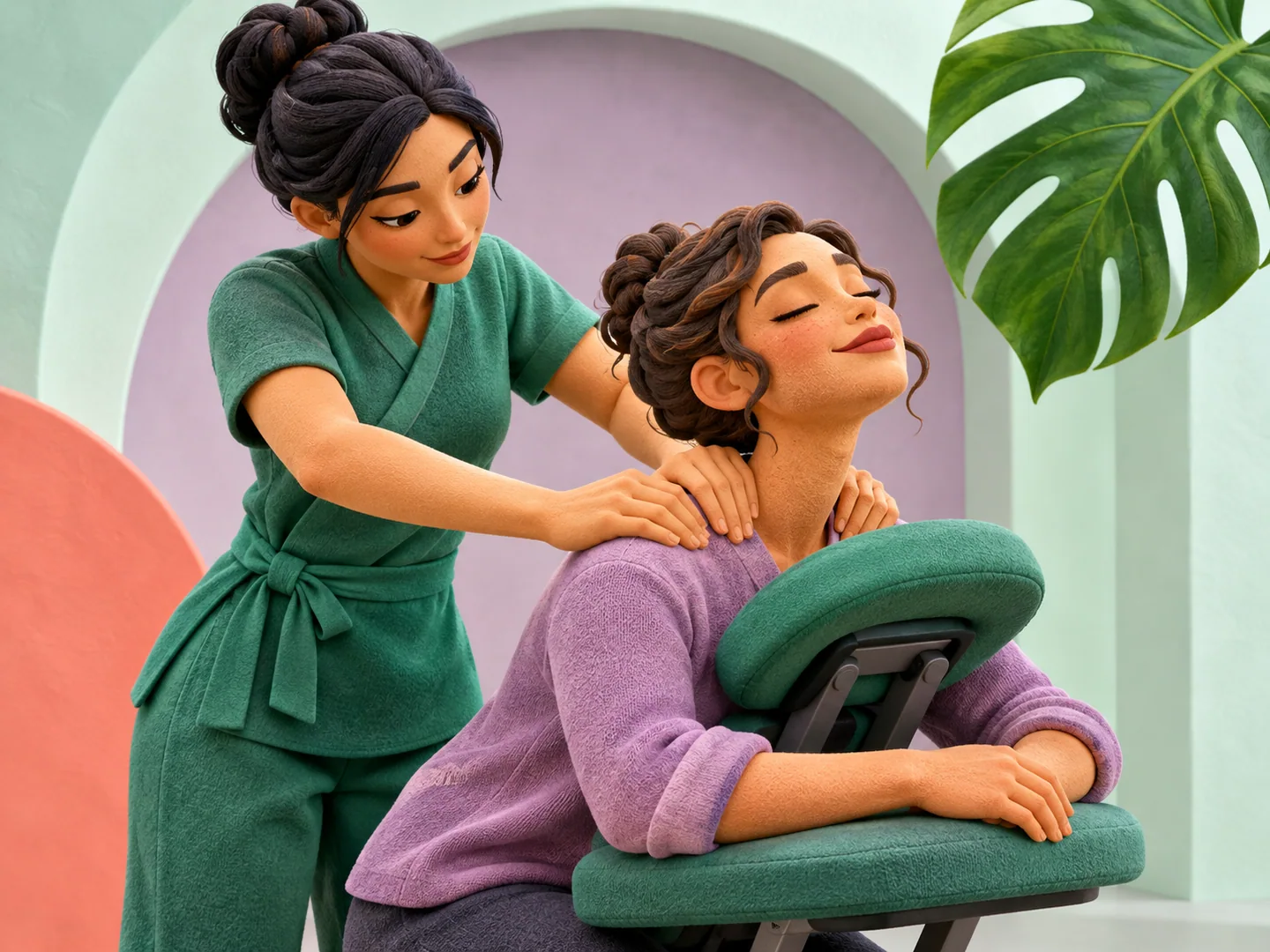
A full appointment book can look encouraging while the studio loses money. The first visit may have been sold at a deep discount, the therapist still needs to be paid, and a guest who leaves without a next appointment may never come back. Build your marketing around attended appointments, repeat visits and the contribution left after delivery and acquisition costs.
Why guests choose a massage studio
People book for different reasons. Some want a quiet hour after a difficult week. Others are looking for a convenient appointment after work or an experience that suits their preferences for pressure, privacy and conversation. A page with only stock photos and a discount gives them little to judge.
Show the therapist, what happens on the first visit, how long the session lasts and what the guest will pay. Give directions to the entrance and show the times customers can actually book. Ask the front desk which questions come up before an appointment and put those answers near the booking button.

For a solo practitioner this may fit in a map listing and a booking link. When a studio offers several services or has multiple rooms, individual service and practitioner pages help guests find the right appointment.
Why a satisfied guest might not return
A guest who smiles at reception may still have found the session uncomfortable, had to wait or been unsure what to book next. Let the therapist ask the guest about preferences at the start and check in during the appointment. Make it easy to say when the pressure or room temperature should change. Respect guests who prefer a quiet session.
After the session, ask for one concrete piece of feedback. If the guest wants another visit, offer two times while they still have the calendar open. Give the next visit a clear price and describe any package the guest asks about, including what it includes and how they can reschedule. Record the agreed preferences so they can be picked up next time.

A booking reminder should include the time, address and a way to change the appointment. Where a deposit is used, explain the amount and conditions before the guest confirms. Track late cancellations and missed visits separately. Add a waitlist for times that often fill up and use it when a slot becomes available.
What a studio needs online
| Setup | A practical starting point |
|---|---|
| One therapist or room | An accurate map profile, a clear price list and a working booking link. |
| Several therapists and services | Service and staff pages that lead to the correct availability in the booking system. |
| Several locations | A page and map listing for each location, with separate schedules and a shared view of bookings. |
Start with the most common journey. A guest searching on a phone should be able to choose a location, find the price and confirm an available time. Try booking, cancelling and moving a test appointment. Check that each change reaches the therapist's schedule and the front desk. A bot in a channel your guests already use can carry confirmations and reminders. The booking system should hold the current availability.

Keep the basic details visible on the site alongside any embedded booking widget. The address, durations, prices and cancellation terms should be easy to find even when a guest first lands on a specific service page.
Four ways to find nearby guests
Partner with businesses your audience visits
A gym, Pilates studio, hair salon or other nearby business can introduce you to people who already make regular trips to the area. Start with one partner and a single service. Give each business a booking link or source code and check how many people actually attend. Agree on the terms with the partner and let guests choose whether to share their details.
Improve the map listing
Check the name, entrance, opening hours, price range and contact information on the map services used in your area. Use real photographs that show where to go and what the rooms look like. An NFC label or QR code at reception can take a guest directly to a review form. Invite honest feedback and answer questions raised in reviews. Watch attended bookings from the listing as well as views and route requests.
Run separate tests for search and social ads
Use a small campaign around realistic travel distances and available times. Search ads can address a specific service, while a social campaign can explain a first visit to people who live or work nearby. Route each ad to the matching page and record the channel in the booking system. Compare enquiries, confirmed appointments and attended visits before allocating more budget.
Set the terms of an introductory offer
A first visit offer can fill an unused time slot. Calculate its contribution after staff costs, payment fees and delivery costs, then measure how many guests book again. When testing a voucher platform, include its commission and any limit on available appointments. Use clearly priced packages with dates and conditions that the studio can honour.


Keep service descriptions and messages clear
The Russian examples in this guide distinguish wellness services from medical massage. The activity you carry out, the claims on the service page and the documents under which you work all matter. For a wellness service, explain the session, its length, the price and the experience the guest can expect. Review medical claims and licensed services separately when setting up the price list or campaign.
Show the terms for deposits, cancellations and packages before taking payment. Keep booking messages predictable and separate from promotions. Record customers' choices about promotional messages and give them a way to stop receiving them.
How much can you pay for a new guest?
Calculate the contribution left from a session after direct costs. For the acquisition decision, multiply that contribution by the average number of attended visits from a group of new guests. This is a contribution measure, sometimes called margin LTV. Rent, reception and tax still need to be covered.


The example uses RUB 1,600 of contribution per session and an average of 2.6 visits. That gives RUB 4,160 before acquisition. Allocating about 35% to acquisition allows approximately RUB 1,450 per new guest who attends. At a 70% enquiry-to-attendance rate the corresponding limit is about RUB 1,015 per enquiry.
| Measure in the example | Studio A | Studio B |
|---|---|---|
| Cost per enquiry and attendance rate | RUB 2,700 and 70% | RUB 775 and 85% |
| Cost per new guest who attends | RUB 3,857 | RUB 912 |
| Average visits in six months | 1.3 | 3.8 |
| Contribution at RUB 1,600 per visit | RUB 2,080 | RUB 6,080 |
| Contribution after acquisition | −RUB 1,777 | RUB 5,168 |
Follow the same measures for your own channels each month. Count the share of new guests who return, the average number of paid visits, the cancellation rate and the contribution from the slots used. A good number for a first visit can look quite different once you see what that guest does over the next six months.
A 30-day plan
- Week 1. Review service names and conditions, calculate contribution per session, and find the time slots the studio can actually sell.
- Week 2. Update map listings and the price list. Test first-time booking, reminders, cancellations and the route to the entrance.
- Week 3. Give therapists and reception a simple way to ask for feedback and offer a repeat appointment. Agree on one local partnership.
- Week 4. Run a small ad test for one service. Review attended visits and repeat bookings in the calendar and compare them with acquisition costs.