
A cleaning company can have a full schedule and lose money on the jobs it buys through advertising. Each visit absorbs crew time, supplies, travel and a share of the cost of answering enquiries. An ad that fills the diary with small, scattered jobs can leave less money than a campaign that books fewer jobs close together. Upholstery cleaning, post-renovation work, recurring visits and commercial contracts each need their own offer and cost model.
Start with the jobs your team can deliver profitably
- Post-renovation and deep cleaning. Show the work included and the surfaces you can handle. Ask for photos or a short video when dust, residue or access make a price per square metre unreliable.
- Homes with delicate finishes. Explain how your crew works with stone, wood and upholstery, who supervises it and how damage claims are handled. Show the applicable limits if you carry liability insurance.
- Recurring residential cleaning. Offer a clear scope, frequency, total price and a way to move or cancel a visit. Group bookings where they reduce travel time.
- Commercial cleaning. Quote against an actual schedule, shift coverage and a written service standard. Give procurement enough detail to compare your plan and documents with competing offers.
Measure paid and completed jobs for each offer. An enquiry is useful when it matches the service area, scope and minimum price. Record why you declined or lost other enquiries so you can improve the campaign and intake process. How to increase website conversion
What a cheap first visit can cost
The Washington State Attorney General described a Homeaglow offer for an initial cleaning at $19. Customers also incurred fees through a recurring membership whose terms were insufficiently clear. The settlement addressed disclosure, informed consent before charging for membership and a simple way to cancel. A cleaning company can offer an introductory discount. The customer should be able to see what future visits will cost, what is included and how to stop recurring payments before signing up. Washington State Attorney General
A discount also needs a margin calculation. A full schedule is valuable only when the money from each visit covers the work, the cost of getting the job and the time it takes to deliver it. Set a minimum booking price where travel or equipment setup would otherwise consume the margin. Track repeat activity before relying on it to pay for an introductory discount.
Work out an affordable cost per enquiry
For an initial budget, multiply the gross profit expected from a completed job by the share of enquiries that become paid jobs and the share of that gross profit you can spend on acquisition. With RUB 10,000 of gross profit, 25% conversion and a 30% marketing allowance, that gives RUB 750 per enquiry. If conversion drops to 10%, the same assumptions give RUB 300. Set the allowance using your cash needs and overhead.
The example below uses direct costs equal to 55% of revenue. The recurring column represents the revenue and direct costs you actually expect over a year.
| Measure | Small one-off clean | Post-renovation or upholstery package | Recurring customer |
|---|---|---|---|
| Revenue in the example | RUB 5,000 | RUB 30,000 | RUB 28,000 over 12 months |
| Gross profit before acquisition | RUB 2,250 | RUB 13,500 | RUB 12,600 |
| Enquiry price and conversion to a job | RUB 600 at 25% | RUB 1,500 at 30% | RUB 900 at 30% |
| Acquisition cost per paying customer | RUB 2,400 | RUB 5,000 | RUB 3,000 |
| Contribution after direct costs and acquisition, before overhead and tax | −RUB 150 | RUB 8,500 | RUB 9,600 |
Collect gross profit, cancellations and travel time for each type of work. Separate an initial enquiry from a confirmed visit and a completed job. If a recurring customer moves house or cancels, update the forecast to reflect the actual number of visits.

Show customers how you protect their home
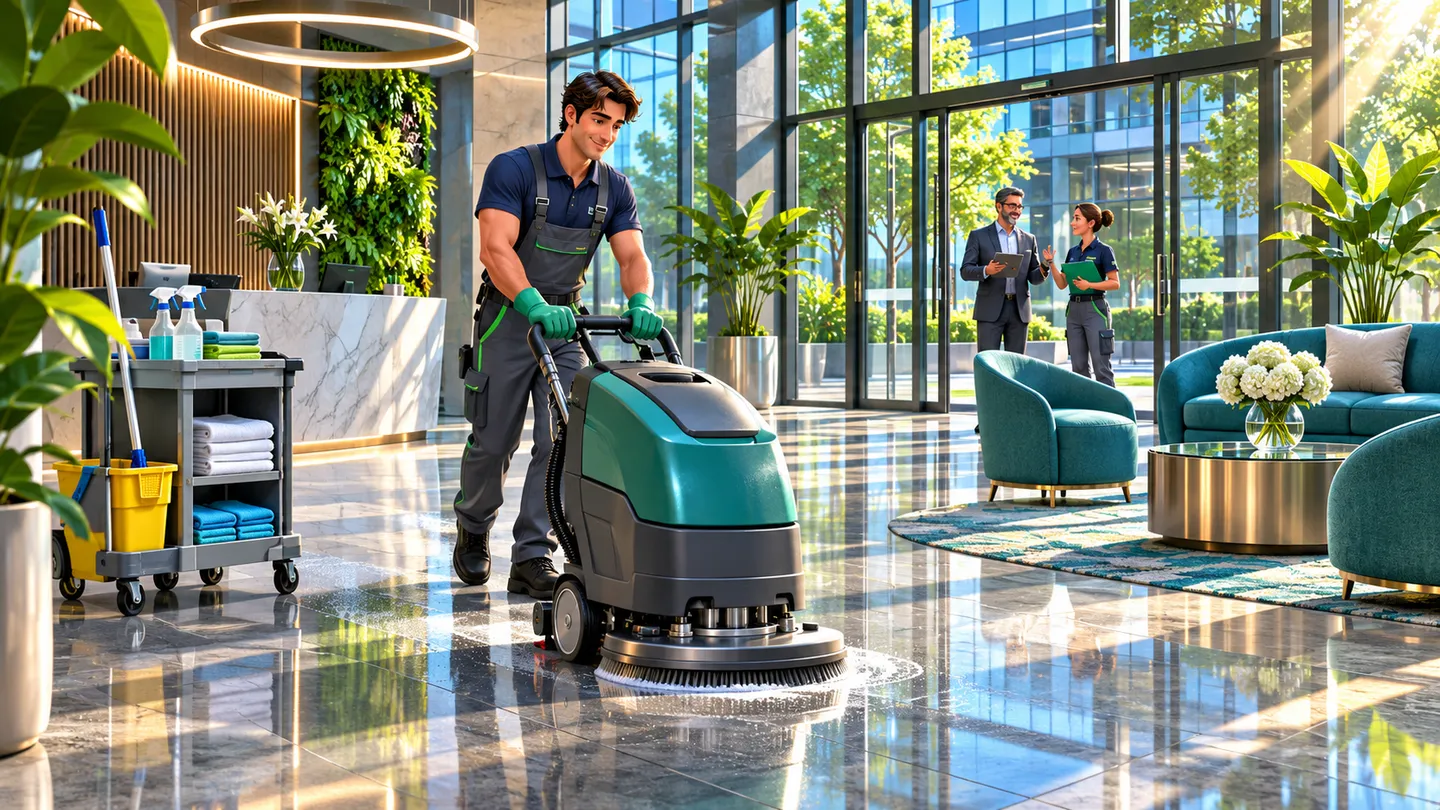
A photo of a uniformed crew helps a customer recognise the people arriving. Show what the crew will do, which finishes require a test patch and how you confirm the condition of valuable surfaces. Explain the handling of access codes and keys in the order confirmation. With the customer's consent, take photos relevant to the work and retain them only for an agreed purpose.
If you have liability cover, publish the relevant certificate or explain the policy in plain terms. State the limit, key exclusions and the first step for reporting damage. Check whether the policy applies to subcontractors, valuable items or all services you offer. Give customers a named contact for questions after a visit.
For an office or warehouse, prepare a scope by area, shift and frequency. State how you replace an absent worker, who signs off a visit and how quickly a supervisor responds. Russian businesses should state the VAT treatment that actually applies to the contractor. The general VAT rate increased to 22% in 2026. Exemptions and rates under the simplified system depend on the applicable conditions. Federal Tax Service guidance

Protect margin with optional services and closer routes
A customer booking a deep clean may also need a sofa, mattress or rug cleaned. Show these as optional services with a clear basis for the price. Check the fabric and condition before promising stain removal. Estimate the extra minutes, equipment and chemicals before adding a service to a package.
Track driving and setup separately from time at the property. Group repeat visits on streets or in districts the crew already serves. Where the route fits, give returning customers a choice of suitable slots. Add a travel charge or set a minimum booking where jobs are farther apart. Capacity improves when paid work occupies more of the crew's shift.


Build a separate booking path for each service
Use a calculator where price inputs are predictable
Show an indicative price for regular cleaning based on the size, number of rooms or agreed frequency. Show extras and the terms of a recurring plan before the visitor chooses a slot. When a job depends on the condition of a sofa, window or recently renovated flat, ask for the necessary photos, area and location. State when a human reviews the photos and how the final quote is agreed.
Connect search ads, maps and Avito to the right offer
Create a search ad and landing page for a particular service, such as cleaning after renovation. Match the ad's promise to the price assumptions, service area and booking steps on that page. Keep hours, contact details, prices and service areas accurate on maps. Show relevant past work with permission. On Avito, include the minimum booking, relevant locations and what is included so the team can spend more time on enquiries it can serve.
Track the ad or listing through to a paid visit. Include staff time spent answering and quoting, so a cheap form fill does not hide an expensive booking. Website, Mini App, Avito or social media


Use a bot or Mini App where the process is repeatable
For new enquiries, a bot can collect location, job type, photos and preferred times. Give the dispatcher the original request in the CRM and make clear which quotes need inspection. Give returning customers the option to see their visits, move a booking, approve an add-on or pay where the platform and payment provider support it.
An internal checklist can record the crew's arrival, any pre-existing damage and the handover. Keep customer contacts and access details visible only to the people who need them. Give customers a dependable way to change the visit or request another crew through the company. The value of booking through the company comes from the service, records and support that follow the order.
Check what Telegram and MAX support for the account and use case. Obtain the appropriate consent for promotional messages. Report delivery, opt-outs and repeat visits when testing reminders. MAX for business · MAX platform rules

A 90-day plan
| Period | Changes to make | What to measure |
|---|---|---|
| Weeks 1 and 2 | Separate campaigns and offers by service. Record enquiry, quote, booking and completed visit in the CRM. Give evening requests an owner. | Acquisition cost per completed job, response time and the main reasons for lost enquiries |
| Weeks 3 and 4 | Explain scope, cover and crew process. Test photo estimates for complex work and clear prices for predictable tasks. | Qualified quote volume, quote-to-booking rate and average contribution |
| Months 2 and 3 | Group nearby visits. Pilot a recurring plan and crew checklist. Test optional extras against real labour time and cost. | Repeat visits, travel hours, contribution per crew day and customer complaints |
Common questions
Why do customers abandon a price-per-square-metre calculator?
Floor area alone may miss the amount of renovation residue, type of finish, furniture condition or time needed to reach the property. Use it where the job is standard. Give customers a quicker way to show the team what needs closer assessment.
How can a cleaning company compete with lower-priced independent cleaners?
Choose jobs that value equipment, coverage, continuity and a documented result. Explain the scope, give real examples and make it clear who handles the work if a crew member is unavailable.
Are post-renovation cleans or subscriptions better?
Measure their different roles. A visible one-off job can pay for acquisition immediately. Recurring visits can make a route more predictable and profitable if customers stay. Review the first visit margin and the cash it takes to earn later revenue.
RM Systems builds landing pages, multi-page websites and bots and Mini Apps for enquiries, estimates and repeat bookings. Roman Mikhaylov, developer