
A metalworking shop may spend one month turning down work and the next trying to keep the machines occupied. Taking a low-margin tender can fill the schedule, but it leaves little room for setup time, rejected parts or delayed payment. Regular production orders require a different way to reach buyers and turn a drawing into a quote.
The buyer wants to establish three things before investing time in a conversation. Can this shop make the part, can it deliver the batch, and can it prove the result? Your website, enquiry form and quoting process should answer those questions in order.

Match acquisition to the shop’s capabilities
A specialist CNC shop should publish the processes, materials, part dimensions and batch sizes it handles well. A sheet-metal shop needs clear information about cut sizes, thickness, bending and finishing. A structural fabrication business should show project capacity, quality records and how transport and assembly are handled.
Use pages about those capabilities to reach buyers searching for a specific job. Use focused Avito listings and search ads where they fit the work. Send every suitable enquiry to a form or bot that can collect a drawing, quantity, material and deadline. The production team can then evaluate a job instead of guessing what a caller wants.
Show buyers what they need to qualify a supplier
A purchasing decision may involve procurement, an engineer, quality control and finance. Procurement wants a comparable price and delivery date. The engineer wants to see the processes and tolerances the shop can hold. Quality control needs material and inspection records. Finance needs payment and contracting terms.
Make the useful facts available before the first call. Publish a machine list with work envelope, supported operations and material ranges. Explain which inspections and records can accompany an order. Give real examples that include quantity, material, tolerance and lead time. A case about a part close to the buyer’s own requirements is more useful than a general gallery.

Fix five common problems on a manufacturing website
- A generic opening screen. Name the operations and work you want. A buyer should see whether the shop handles prototypes, small batches or repeat production.
- A machine list with no usable specifications. Add work envelope, turning diameter or stock thickness where relevant. State the limits that determine whether a drawing fits.
- Stock photography and vague case studies. Show the actual workshop, measuring equipment, people and parts. Describe a completed job with the technical details you are allowed to share.
- A price claim with no scope. Give a useful range, minimum batch or setup policy. Explain the inputs needed to quote a new part.
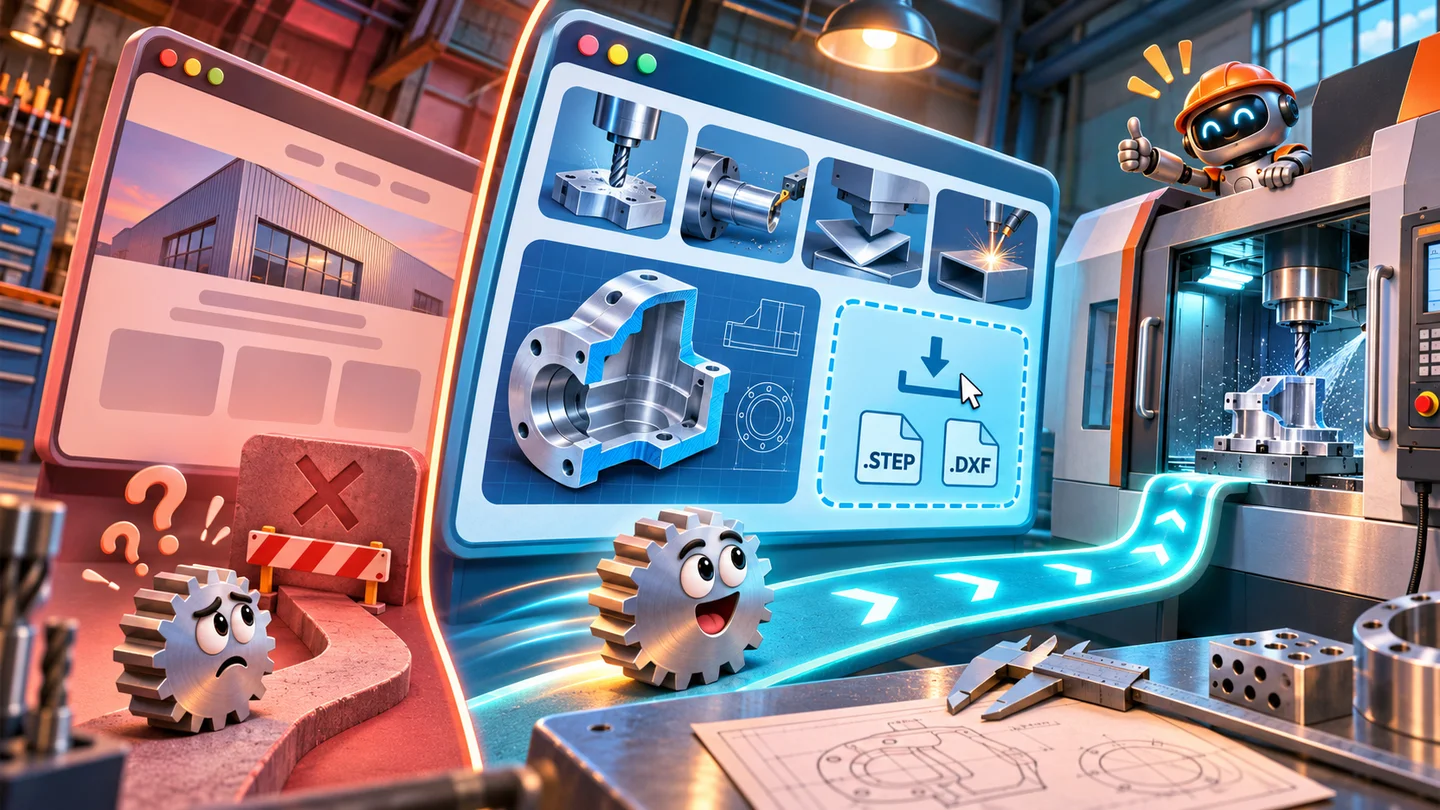
- A callback form as the only route. Let the buyer upload PDF, DWG, DXF or STEP files you can read. Ask for quantity, material, coating, delivery target and contact details. Confirm receipt and say when a person will review the job.
The illustrations compare a general manufacturing site with a page that supports a technical request for quotation.

Build search pages from real capabilities
Plan pages at the intersection of operation, material and part type. A page about CNC turning of stainless steel has a different job from a page about laser cutting a certain sheet thickness. Publish the combinations you can support with a machine specification, example part or useful answer.
Start with the work the shop wants to repeat. Link related operations and materials from those pages. Add examples, accepted file formats, a batch range and a direct RFQ link. Use clear headings and tables so both people and search systems can understand the capability.
Industry directories and consistent supplier details can support discovery. Keep the machine and material information current. When a buyer asks an AI system for a supplier capable of a particular process, precise published specifications give it something it can cite.
Use paid channels to find the right drawings
On Avito, use listings for distinct services. State the materials, work limits and batch minimum. Explain how to send a drawing. If you only work with companies, say so before the chat begins.
For Yandex Direct, separate campaigns by operation and buyer intent. A broad keyword can bring students, DIY requests and one-off repairs. Narrower combinations can lead to pages with the specifications and batch information the buyer needs. Review search terms and actual RFQs before increasing the budget.
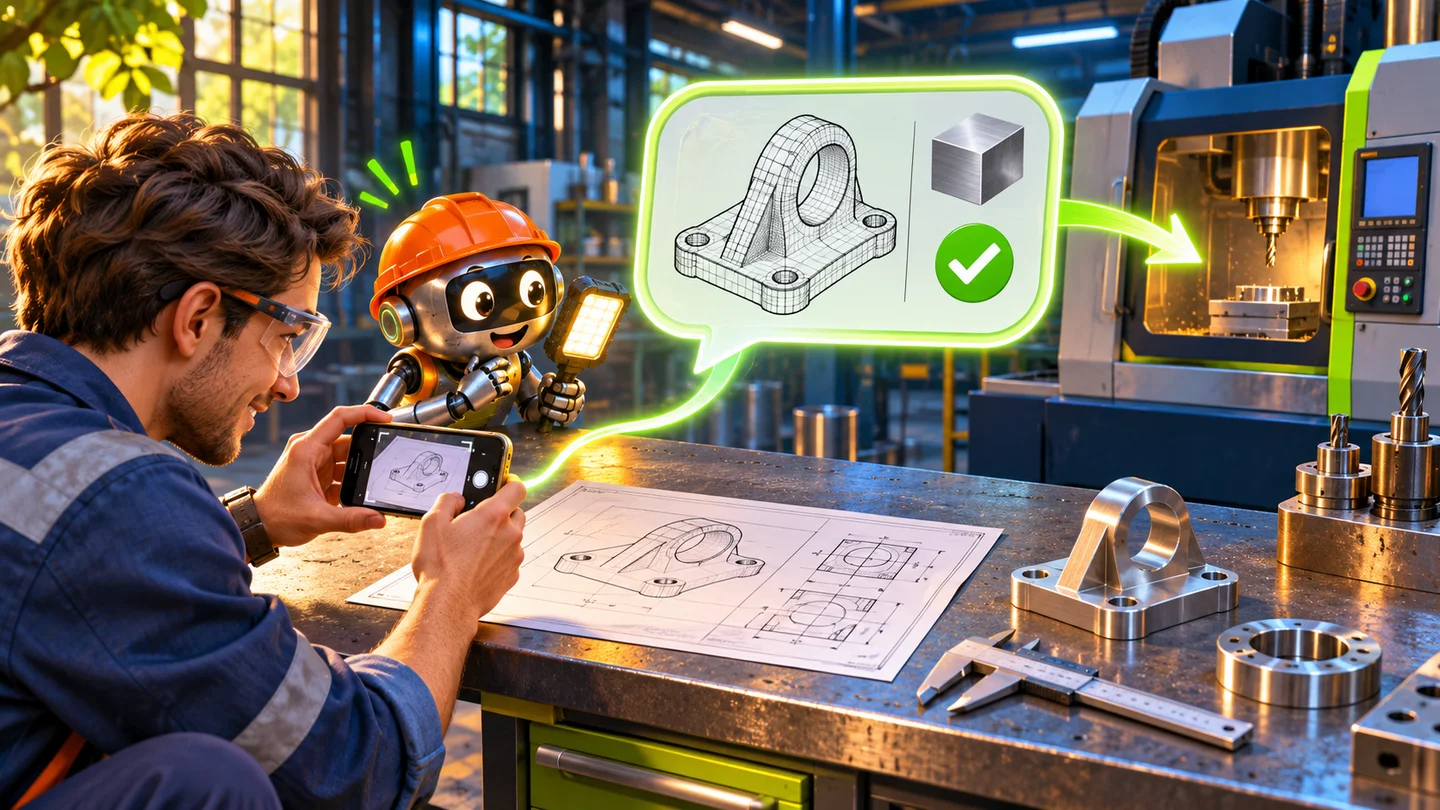
A Telegram or MAX bot can accept the drawing and collect the missing fields. Connect it to the CRM so a sales engineer receives one enquiry with the files, company, quantity and due date. Give the customer a confirmation and a way to send a revised file. Keep the drawing and access record with the order.
Set an early response target for requests for quotation
A drawing in the inbox can sit between sales and production engineering. A quick first response helps the buyer know the request is being handled and gives the shop a chance to ask about missing specifications. Use four hours as a target for a useful first response. Complex assemblies may still need a longer, agreed calculation window.
Use triage to keep the estimator’s queue manageable.
| Queue | Typical enquiry | Response |
|---|---|---|
| Priority | A credible repeat buyer, complete drawings and a batch that fits available capacity | Confirm the fit and give a preliminary quote or calculation time |
| Standard | A prototype, medium-sized batch or incomplete but promising specification | Assign an estimator and ask for the missing details |
| Outside scope | A part beyond the machine envelope, below the minimum batch or lacking a usable drawing | Explain the limitation and state what information would let you assess it |
The CRM can route work based on company details, process, size, quantity and file completeness. A production engineer should make the technical decision. Measure the time to first response, time to quote, win rate and the work completed at the quoted margin.
Offer quantities the buyer can compare
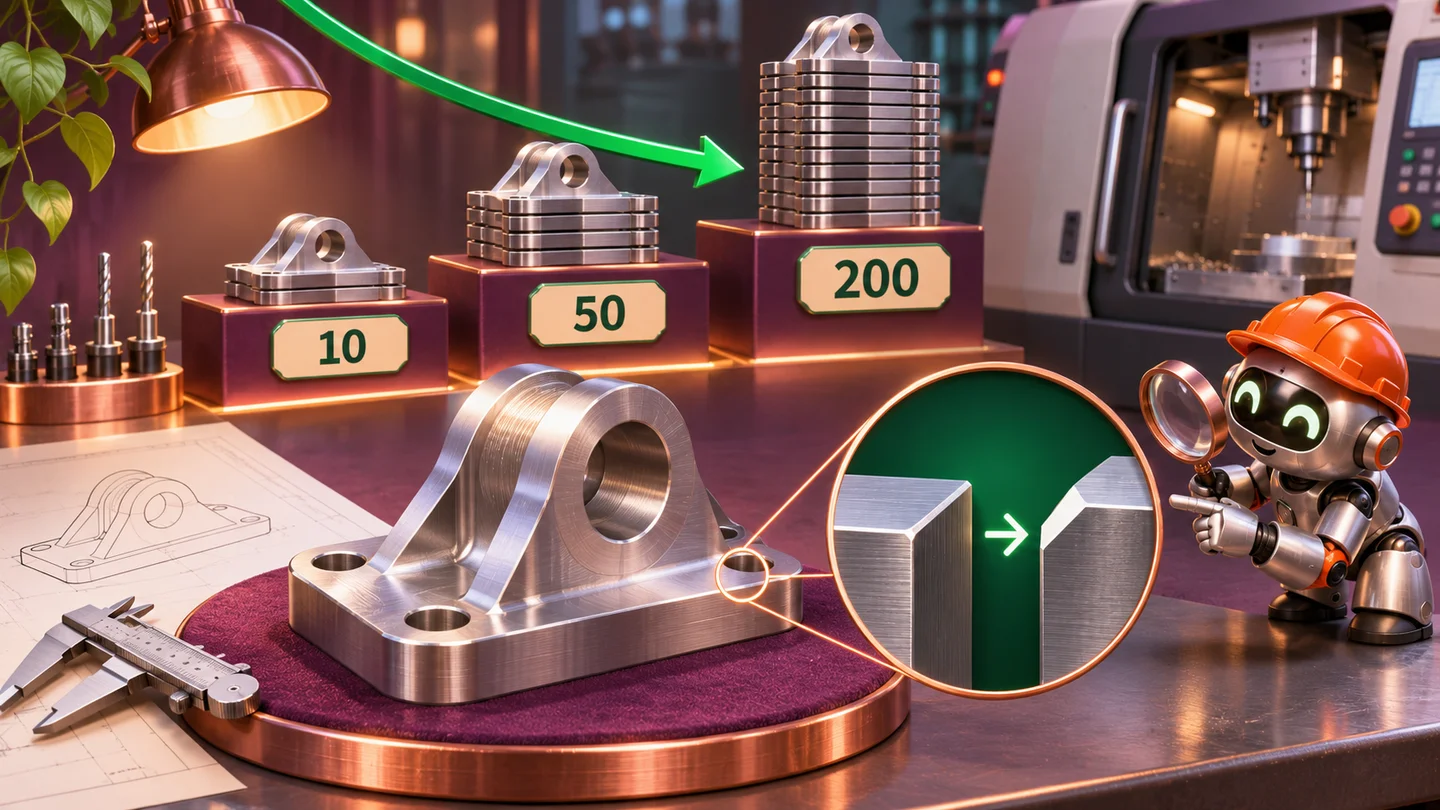
Give the buyer a useful choice between trial, small batch and production quantities. Use the same material and finish in the comparison. Show unit price, batch price, weight and lead time. If a change to a non-critical tolerance could reduce cost, show it as a separate option for approval.
This example covers a bearing housing quote. The figures include the general Russian VAT rate of 22%. Apply the treatment that is relevant to the supplier and transaction. Federal Tax Service guidance
| Quantity | Unit price | Batch price | Net batch weight | Lead time |
|---|---|---|---|---|
| 10 trial parts | RUB 2,400 | RUB 24,000 | 18.5 kg | 5 working days |
| 50 parts | RUB 1,650 | RUB 82,500 | 92.5 kg | 7 working days |
| 200 parts | RUB 1,290 | RUB 258,000 | 370 kg | 10 working days |
The figures refer to one design, with an H7 tolerance and passivated stainless steel. The buyer can see how the setup cost is spread over the batch and compare the delivery options.

Protect the economics of repeat production
Discuss unnecessary tolerances with the buyer’s engineer before machining. A part may require a tight fit in one feature and ordinary tolerances elsewhere. Use design-for-manufacture suggestions with explicit approval. Record the revision you quote and the one you make.
Separate setup, fixtures and programming from repeat unit costs. Quote quantities that show how those costs spread across a batch. Explain what changes if the drawing is revised or the buyer needs a different material.
Distinguish supplier-provided material from customer-supplied stock. Agree its condition, inspection, traceability, scrap handling and who carries the risk of unsuitable material. The time needed to manage customer material belongs in the estimate.
For a new customer, use payment terms that fit the risk and cash needed for the job. Record trial batches and results before reserving regular capacity. A framework agreement can set batch schedules, accepted revisions and payment dates when both sides have a working production process.
Scope the website and drawing workflow
Price the capability pages, technical case studies, drawing upload and CRM integration as separate parts of the work. The useful starting point is a clear list of processes and a form that lets the sales team receive a usable RFQ. Add a bot and automated triage after the team has agreed the inputs and response standards.
Drawings can contain confidential information. Use a documented storage and access process, agree how long files are kept, and avoid putting customer drawings in public examples without permission. Make it clear who can download, change or share a file. Apply the data protection and contracting requirements relevant to the project.
A 90-day rollout
- Weeks 1–3. Record the machine list, material ranges, work limits and suitable batches. Publish the core capability pages and a drawing upload form. Define the fields needed to quote.
- Weeks 4–6. Add real engineering case studies and photographs. Launch focused listings and search campaigns. Give incoming requests an owner and a response target.
- Weeks 7–9. Expand the pages for the combinations that bring suitable drawings. Connect bot, form and CRM records. Use triage to protect the production engineers’ time.
- Weeks 10–12. Review lead time, quote conversion and margin by job type. Offer trial and series quantities on the best-fit work. Agree repeat schedules with customers whose projects and payment terms work for the shop.
Frequently asked questions
Should a metalworking shop publish prices?
Publish a range or example for a defined scope, material and batch. Explain setup costs and your minimum. A buyer can use that information to decide whether to send a drawing. The firm quote follows the technical review.
How can a shop reduce price-shopping requests?
Ask for company information, actual drawings, quantity, material and the intended schedule. Set the minimum scope visibly. Use a standard response for exploratory enquiries and reserve a detailed estimate for requests you can assess.
How can the team respond in four hours to a complex assembly?
Confirm receipt, identify missing information and give a time for the calculation. Assign someone to the request and tell the buyer which items need engineering review. A meaningful initial response keeps the project moving while the firm quote is prepared.
Build a path from the drawing to a repeat order
The system begins with published capability, continues through a complete RFQ and ends with a quote the buyer can compare. Separate one-off work from repeat production, show what changes the cost and give the engineers a manageable queue. Measure the orders and margin the system produces.
RM Systems builds multi-page manufacturing websites, RFQ bots for Telegram and MAX and CRM integrations. Contact Roman Mikhaylov to discuss the drawing and quotation workflow your shop needs.